
Reviewed · IMPERIAL CITY & CITADEL TOURS
Hue Imperial City and Forbidden City Walking Private Tour
Hue’s Citadel makes sense with a guide. On this private Hue Imperial City walking tour, I like how the Nguyen Dynasty story gets laid out through real places, not vague explanations, with guides such as Nhi or Austin bringing the timeline into focus. You also get a tight set of royal stops in about 150 minutes, so it feels efficient instead of rushed.
My second favorite part is how the walk pinpoints key power moments: places like Duyệt Thị Đường (the oldest preserved Nguyen theater) and the Nine Dynastic Urns with their 162 carved images. One practical drawback: entrance tickets are not included, so you’ll want to plan on paying the Imperial City entry fee on the spot (200,000 VND per person) and keeping some cash handy.
In This Review
- Key highlights worth putting on your list
- Finding the 4 Bronze Cannons and getting your tickets sorted
- Flag Tower to Cua Ngo Mon: gates that explain power
- Thai Hòa Palace: the coronation space for 13 Nguyen kings
- Inside the Hue Imperial City: learning the map as you walk
- Duyệt Thị Đường Royal Theater: the oldest preserved Nguyen stage
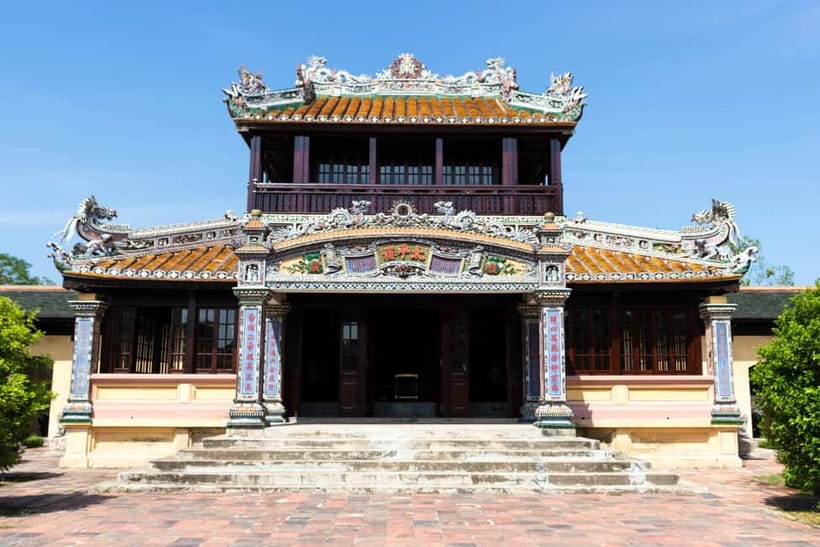
- Thiệu Phương Garden and Thái Bình Lâu: royal calm in the middle of power
- Kiến Trung Palace: a palace story with an interruption, then a comeback
- Cung Diên Thọ: where the Queen Mother lived, and what carvings can tell you
- Hưng Tổ Miếu, Nine Dynastic Urns, and Hiển Lâm Các
- Price and tickets: getting value from a $23 private tour
- Rain, pacing, and how guides change the experience
- Who this Hue Imperial City walk is best for
- Should you book this tour?
- FAQ
- How long is the Hue Imperial City and Forbidden City walking tour?
- Is this tour private?
- What language is the guide?
- Where do we meet the guide?
- Are entrance tickets included in the price?
- Does the guide help with buying tickets?
- Is hotel pickup and drop-off included?
- What sites will we see during the walk?
- Where does the tour end?
- What are the combo ticket options if I plan to see tombs too?
- Can I cancel and get a full refund?
Key highlights worth putting on your list
- Start at the 4 Bronze Cannons (Nine Holy Cannons) near Cửa Ngăn, then step right into the story of the Nguyen court
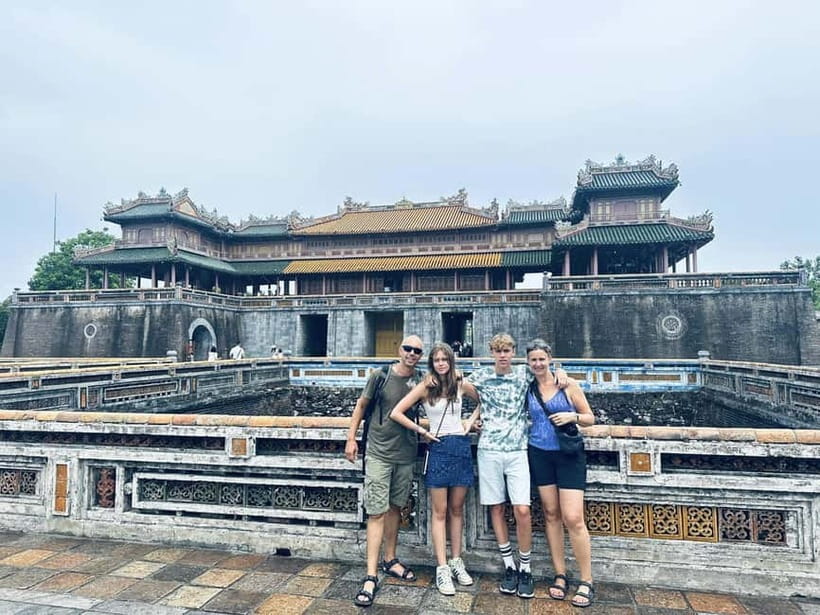
- Ngọ Môn and Cua Ngo Mon photo stops where your guide explains who could go where and why
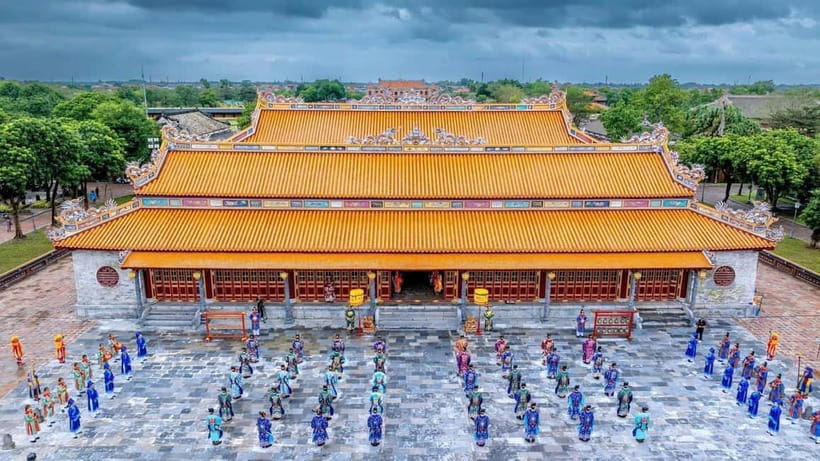
- Thai Hòa Palace, the coronation place for 13 Nguyen kings
- Duyệt Thị Đường Royal Theater, one of four Nguyen-era theaters and the oldest preserved
- Thiệu Phương Garden and Thái Bình Lâu, royal green space plus a king’s rest pavilion
- Nine Dynastic Urns and Hiển Lâm Các, including the 1835 Minh Mang bronze urns with 162 images
More time inside the Citadel walls
- Hue Customizable Tour with Imperial Citadel & Forbidden City★ 4.9 · 937 reviews
- Hue Imperial Ancient City Walking Tour★ 4.8 · 308 reviews
- From Da Nang/Hoian/Hue: Hue Imperial City Full-Day Tour★ 4.8 · 295 reviews
- Hue Imperial City Walking Tour: Citadel & Forbidden City★ 4.8 · 245 reviews
Finding the 4 Bronze Cannons and getting your tickets sorted
You’ll meet at the 4 Bronze Cannons area near Cửa Ngăn, and your guide will be holding an A4 paper with your name. This matters because Hue’s Citadel is big, and having someone point you to the right entry moment saves time and stress.
Once you link up, your guide helps you buy the Imperial City entrance tickets, since tickets aren’t included in the tour price. I’d bring cash in Vietnamese đồng so you can move fast at the counter, because your guide will assist with the purchase.
If you selected hotel pickup, you’ll be collected and dropped off. If not, plan to arrive a little early so you can find the cannons area calmly before your guide arrives.
Flag Tower to Cua Ngo Mon: gates that explain power
The first major stop is the Flag Tower (Kỳ Đài Huế), where you’ll do a quick photo stop and a guided look. Your guide connects it to the Nguyen Dynasty’s royal architecture and the court’s flag-bearing role at the Hue Citadel.
From there, you’ll head to Cua Ngo Mon (Ngo Mon Gate) for another short guided walk. This section is short on paper, but it’s useful: gates in the Citadel weren’t just entrances. They were the physical way the court separated rank, access, and ceremony—so when your guide points out where people could and couldn’t go, the whole layout starts to click.
A nice bonus here is pacing. You’re not sprinting across the complex. You’re learning as you move.
Thai Hòa Palace: the coronation space for 13 Nguyen kings
Next comes Thái Hòa Palace, with a photo stop, guided tour, and a bit of walking time. This is the coronation place of 13 Nguyen kings, and that single fact gives the building weight fast.
Your guide will help you understand what you’re seeing in terms of court hierarchy and ritual space—why this area mattered beyond its architecture. Even if you’re not a hardcore history person, you’ll feel the difference between a “pretty palace” and a palace built for political legitimacy.
One practical tip: if you’re into photos, this is a good place to slow down. You’ll often get better angles when you’re not rushing to the next gate.
Hue on foot, a handful more routes

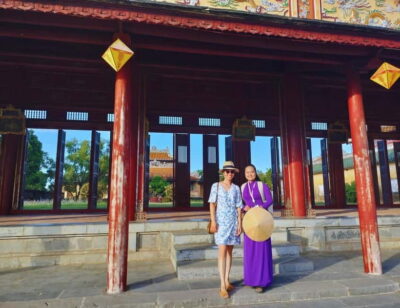


Inside the Hue Imperial City: learning the map as you walk
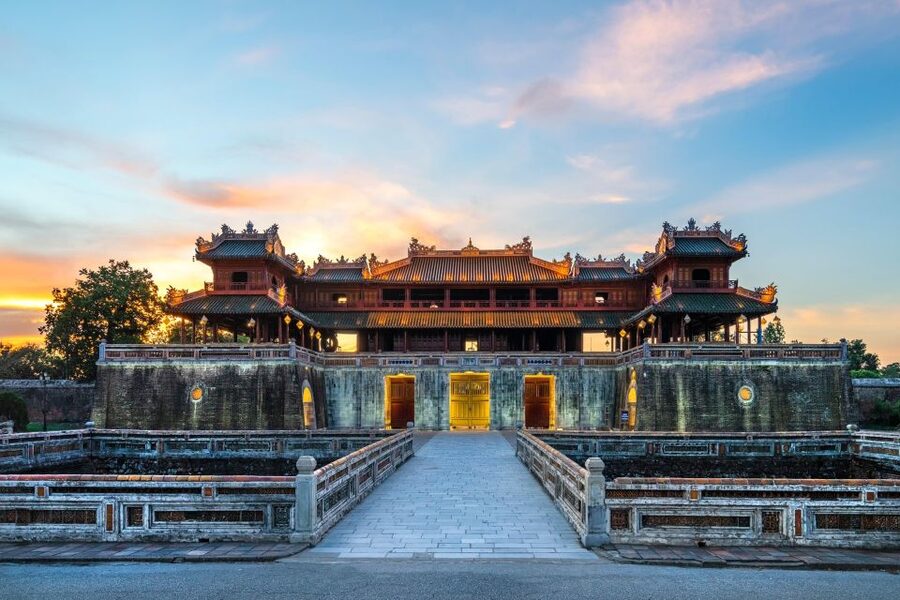
After Thai Hòa, you move through the Hue Imperial City area with another guided sightseeing block. This is where you’ll start noticing the rhythm of the complex: gateways, courtyards, and formal spaces that all help define how the court worked day to day.
Even when certain inner zones aren’t for general visitors, your guide can explain the logic behind them—like how the Forbidden Purple City (Tử Cấm Thành) was reserved for the king and royal family, while mandarins and civilians weren’t allowed close. That kind of explanation helps you connect the dots without needing to physically access every restricted space.
If you’re short on time in Hue, this “guided map building” is one of the strongest reasons to choose a guided tour rather than trying to figure it out alone.
Duyệt Thị Đường Royal Theater: the oldest preserved Nguyen stage

The tour then spotlights Duyệt Thị Đường Royal Theater, another short stop with a guided walk and sightseeing. This matters because it’s one of the four theaters built during the Nguyen Dynasty, and it’s also the oldest preserved one.
Think of this as court culture made visible. You’re not just seeing stone and wood; you’re seeing where royal audiences would gather and where performance could reinforce status and ceremony. Your guide’s explanations are what bring the theater from architecture into context.
If it’s raining, this is also a good stop to be mentally ready for. You’ll likely be moving in and out of covered areas, so wearing layers and bringing a small umbrella can make the rest of the walk easier.
Thiệu Phương Garden and Thái Bình Lâu: royal calm in the middle of power
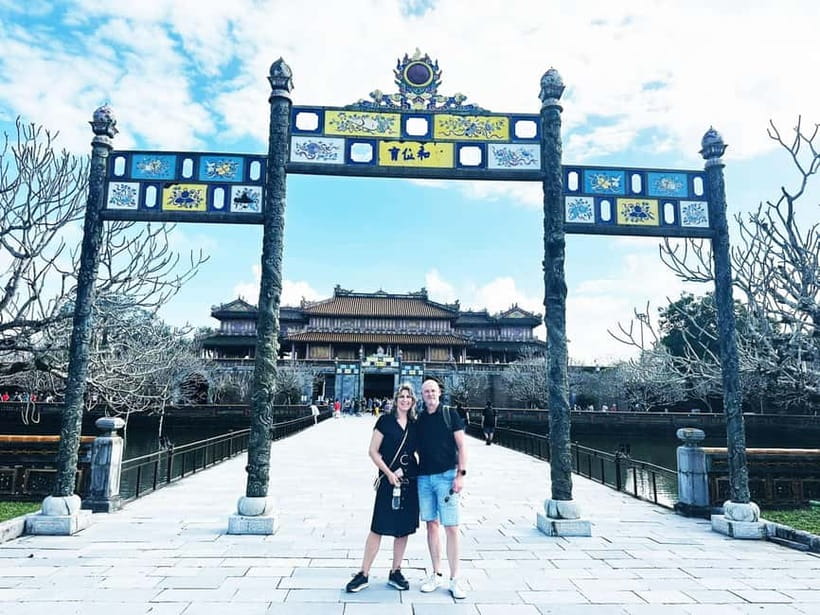
Next up: Thiệu Phương Garden, built in 1828 and one of the typical royal gardens of the Nguyen Dynasty. This is a welcomed change of pace. After gates and formal palaces, the garden gives your brain a breather while still staying in royal context.
Then you’ll visit Thái Bình Pavilion (Thái Bình Lâu), built from 1919 to 1921 as a place for the king to rest and relax. This pairing is smart because it shows two sides of royal life: structured gardens meant for court aesthetics, and later spaces designed for rest.
In other words, you get more than “what was built.” You also get hints of how rulers used the space: work, ritual, and downtime.
Kiến Trung Palace: a palace story with an interruption, then a comeback
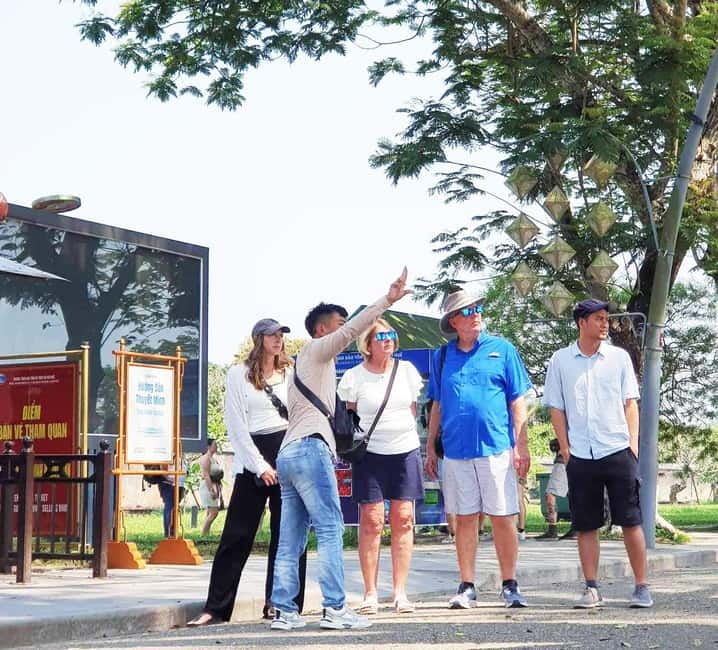
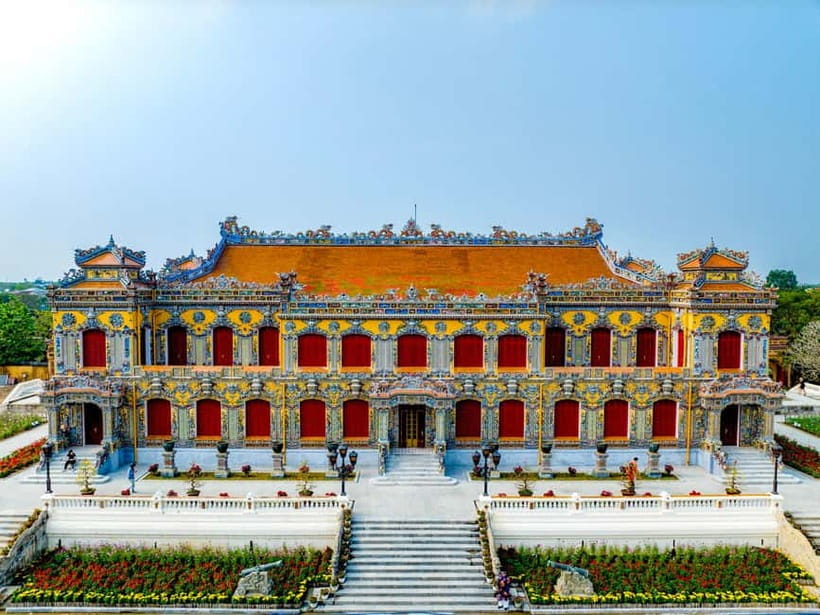
The tour includes Kiến Trung Palace (Điện Kiến Trung). It was built in 1923, highlighted by a mix of Asian and European architecture—and then it collapsed. The key update is that it was restored in 2024.
That restoration date is more than a trivia nugget. It gives you a chance to think about continuity and loss: imperial sites aren’t frozen in time. They evolve, break, and get rebuilt depending on what later generations choose to preserve.
In a short tour window, I like including one stop that has this kind of modern “then and now” angle. It keeps the experience from feeling purely like a museum visit.
Cung Diên Thọ: where the Queen Mother lived, and what carvings can tell you
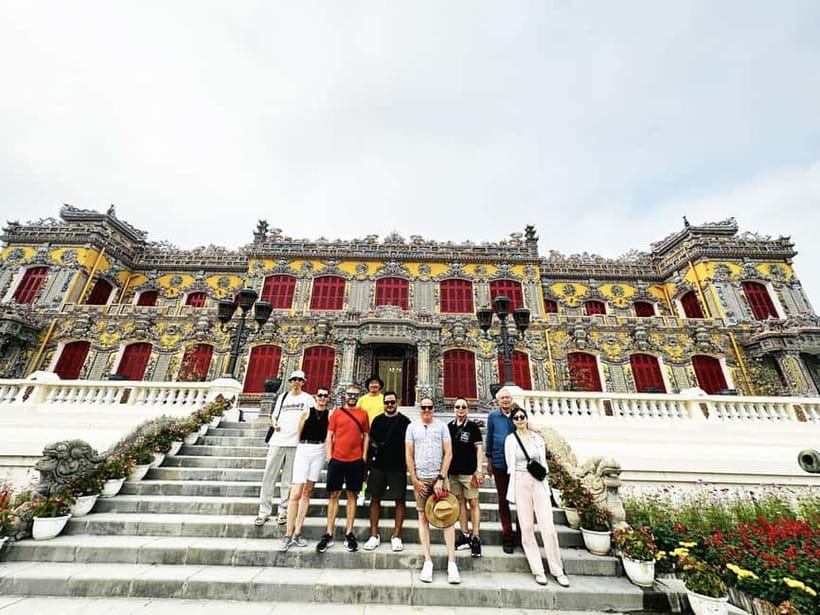
Next is Cung Diên Thọ (Dien Tho Palace), the residence of the Queen Mother. You’ll do a photo stop and guided tour with some sightseeing time, and your guide will point out the large scale and the exquisitely carved details and elegant style.
This stop is valuable because it shifts the lens from kings to the women who shaped court life. You also learn how residence design communicated rank and refined taste.
If you like architecture, this one is a strong bet. If you’re more into stories, your guide will still make it meaningful by connecting the residence to court roles.
Hưng Tổ Miếu, Nine Dynastic Urns, and Hiển Lâm Các
The last stretch is where the tour becomes very “Nguyen Dynasty identity.”
- Hưng Tổ Miếu (Hưng Tổ Miếu Huế): a temple dedicated to worshiping the 10 kings of the Nguyen Dynasty. This is where the religious and political lines blur in the physical setting.
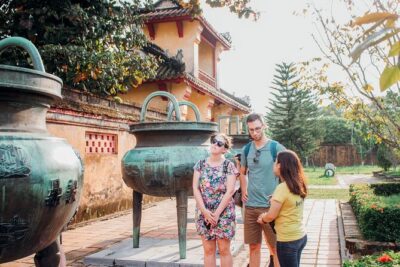
- Nine Dynastic Urns (Cửu Đỉnh Huế): commissioned by Emperor Minh Mang in 1835. There are 9 bronze urns with a total of 162 images cast and carved on them. If you pause and look closely, your guide’s explanation helps you see the urns as more than big bronze objects—they’re record, symbolism, and instruction in metal form.
- Hiển Lâm Các (Hien Lam Pavilion): built from 1821 to 1822, described as the place where emperors had epiphanies. It’s one of those stops that sounds poetic until your guide explains how meaning was tied to space.
Finally, you’ll finish at Cửa Hiển Nhơn. Even that end point feels purposeful: the tour is designed to move you through the Citadel’s logic, not just through a random selection of sights.
Price and tickets: getting value from a $23 private tour
At $23 per person for about 150 minutes, the headline value is the private, English-speaking guide. You’re paying mainly for interpretation—someone to connect who ruled, where authority sat, and why these buildings were laid out this way.
Two big budget notes:
- Entrance tickets are not included. The Imperial City ticket is 200,000 VND per person, and your guide can help you purchase it.
- If you think you’ll add tomb visits, combo tickets can reduce the total cost. A combo is listed as 420,000 VND per adult for the Imperial City with 2 tombs, or 530,000 VND per adult for the Imperial City with 3 tombs. The combo is valid for 2 days.
My practical advice: do the math based on your plans. If you’re only doing the Citadel, pay the single Imperial City ticket. If tombs are on your agenda, check the combo price before you buy anything.
Also, because the ticket counter is involved, bring cash VND so the tour keeps moving. Your guide’s job is to assist, not to fix a cash-only delay caused by your wallet being empty.
Rain, pacing, and how guides change the experience
This tour is built for a relaxed walk with frequent context. That flexibility shows up in the guide experience—different guides have different styles, and it changes how the Citadel feels.
I saw repeated praise for guides like Ha, Austin, and Anna for making the stories clear and making the time enjoyable, not just informational. Anna also came prepared for bad weather in one case, with a poncho and helmet when it was pouring rain, which is exactly the kind of small thought that makes walking comfortable.
And if you’re the type who wants one more practical tip after the tour, several guides in the feedback offered restaurant suggestions and even advice on how to eat local dishes. The tour itself doesn’t include food, but those handoffs can help you end the day without guesswork.
Who this Hue Imperial City walk is best for
I’d book this if you want:
- A short, efficient 150-minute guided orientation to the Hue Citadel
- English explanations focused on Nguyen Dynasty power, ritual, and who used each space
- A private format where you can ask questions and set your pace
You might skip a private guide if you only want to check a few photo spots quickly and you’re comfortable reading signage and guidebooks on your own. But if you care about meaning—why the gates matter, why the theater exists, why bronze urns were made—the guide turns the walk into something you’ll remember.
Also, this is ideal if you’re traveling with limited time in Hue. The itinerary hits the major “story anchors” without turning the day into an all-day commitment.
Should you book this tour?
If your goal is to understand the Hue Imperial City fast, this is an easy yes. The price is low for a private English guide, and the stop list hits the places that explain how the Nguyen court worked—from coronations to royal leisure to monuments like the Nine Dynastic Urns.
Before you book, do one quick thing: plan for the Imperial City ticket (200,000 VND) and bring cash. If you’re also considering tombs, check whether the combo ticket makes sense so you don’t pay twice.
If you want a guided walk that feels focused, personal, and meaningful, this one’s worth reserving.
FAQ
How long is the Hue Imperial City and Forbidden City walking tour?
The tour lasts about 150 minutes, with starting times that can be arranged depending on your requirements (around 2 to 2.5 hours).
Is this tour private?
Yes. It’s a private group tour with a live English-speaking guide.
What language is the guide?
The guide is English-speaking.
Where do we meet the guide?
You meet at the 4 Bronze Cannons area near Ngan Gate (Cửa Ngăn). The guide will be holding an A4 paper with your name.
Are entrance tickets included in the price?
No. The Imperial City entrance ticket is not included and costs 200,000 VND per person.
Does the guide help with buying tickets?
Yes. The guide assists you with purchasing the entrance tickets.
Is hotel pickup and drop-off included?
Hotel pickup and drop-off are included only if you choose the option that includes it.
What sites will we see during the walk?
You’ll visit stops including the Flag Tower, Cua Ngo Mon, Thái Hòa Palace, Duyet Thi Duong Royal Theater, Thiệu Phương Garden, Thái Bình Pavilion, Kiến Trung Palace, Cung Diên Thọ, Hưng Tổ Miếu, Nine Dynastic Urns, and Hien Lam Pavilion.
Where does the tour end?
The tour finishes at Cửa Hiển Nhơn.
What are the combo ticket options if I plan to see tombs too?
You can buy combo tickets that include the Imperial City and tombs. The options listed are 420,000 VND with 2 tombs or 530,000 VND with 3 tombs, and the combo is valid for 2 days.
Can I cancel and get a full refund?
Yes. Free cancellation is available up to 24 hours in advance for a full refund.
The Old Capital on Foot
- Hue Imperial Ancient City Walking Tour
★ 4.8 · 308 reviews - Hue Imperial City Walking Tour: Citadel & Forbidden City
★ 4.8 · 245 reviews - Eat like a local with a local – Walking Tour
★ 4.9 · 57 reviews - Hue Imperial city walking tour and optional royal tombs
★ 4.7 · 19 reviews - Hue: Hue Walking Tour to Imperial Citadel with Tour Guide
★ 5.0 · 10 reviews - Hue Walking Street Food Tour
★ 5.0 · 6 reviews
More Tour Reviews in Hue Vietnam
- Hue Customizable Tour with Imperial Citadel & Forbidden City
★ 4.9 · 937 reviews - Hue :Exploring Royal City with Multi Options and Dragon Boat
★ 5.0 · 675 reviews - Hue City Tour Full Day – Group Tour
★ 4.7 · 518 reviews - From Hue: DMZ Tour with Vinh Moc Tunnels and Khe Sanh Base
★ 4.9 · 503 reviews - Hue: Private Car to Hoi An via Fabulous Stops
★ 5.0 · 371 reviews - From Hue: Hoi An Bus Transfer with 4 Sightseeing Stops
★ 4.6 · 366 reviews
Deeper Inside the Imperial Citadel
- Hue Customizable Tour with Imperial Citadel & Forbidden City
★ 4.9 · 937 reviews - Hue :Exploring Royal City with Multi Options and Dragon Boat
★ 5.0 · 675 reviews - Hue Imperial Ancient City Walking Tour
★ 4.8 · 308 reviews - From Da Nang/Hoian/Hue: Hue Imperial City Full-Day Tour
★ 4.8 · 295 reviews - Hue Imperial City Walking Tour: Citadel & Forbidden City
★ 4.8 · 245 reviews - Hue Imperial Citadel, Tombs, Perfume River Boat Tour & Van
★ 4.8 · 76 reviews
Latest Hue Tours We Have Written Up






Imperial City & Citadel Tours, compared.
 ★ 4.9Hue Customizable Tour with Imperial Citadel & Forbidden CityFrom $12937 reviews
 ★ 5.0Imperial City Walk, Motorbike Tour & Private Car OptionsFrom $7732 reviews
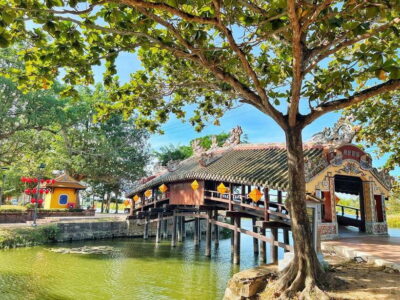 ★ 5.0Exploring Royal City with Multi Options and Dragon BoatFrom $12675 reviews
 ★ 4.8Hue Imperial Ancient City Walking TourFrom $2308 reviews
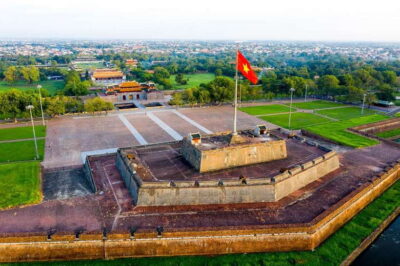 ★ 4.8From Da Nang/Hoian/Hue: Hue Imperial City Full-Day TourFrom $31295 reviews
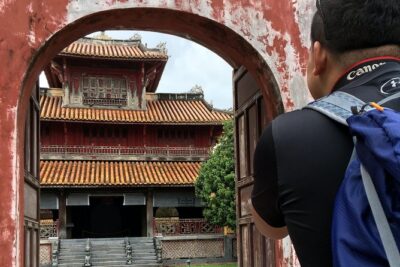 ★ 5.0Hue Imperial City Walking Tour: Citadel & Forbidden CityFrom $9280 reviews
★ 4.8Hue Imperial City Walking Tour: Citadel & Forbidden CityFrom $11245 reviews
★ 5.0Hue Imperial City Walking Tour: Citadel & Forbidden CityFrom $9280 reviews
★ 4.8Hue Imperial City Walking Tour: Citadel & Forbidden CityFrom $11245 reviews
 ★ 5.0Hue Imperial City Walking Tour (Kids Half-Price)From $29133 reviews
Browse the lists this tour appears in