
Reviewed · IMPERIAL CITY & CITADEL TOURS
Hue Imperial city walking tour and optional royal tombs
Hue’s palaces still feel alive. This 2.5-hour walk through the Imperial City turns the Nguyen Dynasty into something you can picture, with a historian guide calling out what matters as you move from gate to gate.
I like two things a lot: you get clear, story-led explanations about the Nguyen Dynasty, and it’s run as a small group, which means your questions don’t vanish into the crowd.
One thing to plan for: the entrance ticket is not included, and it’s 200,000 VND per person, so budget that extra cost before you go.
In This Review
- Key things to know before you walk
- Finding Hue Imperial City: the start at the Nine Holy Cannons
- UNESCO grounds and why Hue became the Nguyen capital
- The 2.5-hour walk: what the historian guide is really doing
- Inside the Imperial City: Hien Lam Cac Pavilion, Mieu Temple, and the Queen Mother Residence
- Hien Lam Cac Pavilion
- Mieu Temple
- Queen Mother Residence
- The Purple Forbidden City: Kien Trung Palace and the Royal Garden
- Kien Trung Palace
- Royal Garden
- Architecture, court engineering, and why the Nguyen era ended
- Morning tours and the 8 a.m. Changing Guard at Ngo Mon Gate
- Optional royal tombs: extending the story beyond the citadel
- Price and logistics: what you pay $26 for, and what you don’t
- Who this Hue Imperial City tour fits best
- Should you book this Hue Imperial City walking tour?
- FAQ
- How long is the Hue Imperial City walking tour?
- What is included in the price?
- Is the entrance ticket included?
- Where do we meet the tour guide?
- Does the guide contact you before the tour?
- What language is the tour offered in?
- Is this a small group tour?
- Is there a morning bonus?
- Does the tour include royal tombs?
- What should I bring in summer?
Key things to know before you walk
- 2.5-hour walking tour focused on Hue’s Imperial Citadel and the Forbidden City area
- Historian-style guiding that connects architecture, politics, and everyday realities of court life
- Specific sights named on the route, including Hien Lam Cac Pavilion, Mieu Temple, and the Queen Mother Residence
- Purple Forbidden City highlights such as Kien Trung Palace and the Royal Garden
- Optional royal tomb time you can add on, if you want to extend your Nguyen-era story
More time inside the Citadel walls
- Hue Customizable Tour with Imperial Citadel & Forbidden City★ 4.9 · 937 reviews
- Hue Imperial Ancient City Walking Tour★ 4.8 · 308 reviews
- From Da Nang/Hoian/Hue: Hue Imperial City Full-Day Tour★ 4.8 · 295 reviews
- Hue Imperial City Walking Tour: Citadel & Forbidden City★ 4.8 · 245 reviews
Finding Hue Imperial City: the start at the Nine Holy Cannons
Your tour starts right at the Nine Holy Cannons area, not somewhere vague. Look for the guide waiting by the 4-cannon side, with the 5-cannon on the opposite side. You’ll also get a WhatsApp text from the guide before you meet, which is a nice touch when Hue is busy and sidewalks are not exactly orderly.
This matters more than you might think. Getting oriented fast helps you enjoy the day instead of spending your first minutes figuring out where the route begins. From that meeting point, the walk is designed to bring you steadily into the parts of the complex that explain how the Nguyen court wanted power to feel: controlled, ordered, and very intentional.
The tour ends back at the same meeting point too. So you don’t have to stress about transport afterward or hunting down a far-off pickup.
UNESCO grounds and why Hue became the Nguyen capital
Hue Imperial City is a UNESCO World Cultural Heritage site, recognized in 1993. The tour’s big goal is simple: help you understand why Hue was chosen as the capital under the Nguyen Dynasty (1802–1945), and how that choice shaped the architecture and the daily rhythm of the court.
A good moment to expect is when the guide frames the whole site as a system, not just a set of pretty buildings. You’ll learn how the royal court’s spaces were arranged to communicate rank and authority. You’ll also hear the kinds of influences that affected construction decisions—whether feng shui ideas mattered more, or whether weather and practical conditions drove choices.
If you’ve been to other imperial sites and felt they were mostly walls and photos, this is a different approach. Here, the walk pushes you to connect design to meaning, so the place clicks. By the time you reach the deeper court areas, you’re not just looking—you’re understanding what you’re looking at.
The 2.5-hour walk: what the historian guide is really doing
A 2.5-hour timeline can either feel rushed or feel sharp. Here, the time is short enough to keep momentum, but paced enough that you can actually absorb explanations while walking between key zones.
What makes this tour work is the guide’s focus on turning history into lived experience. In particular, you’ll get stories tied to palace life and court intrigues, plus practical details about how the royal spaces were made to function.
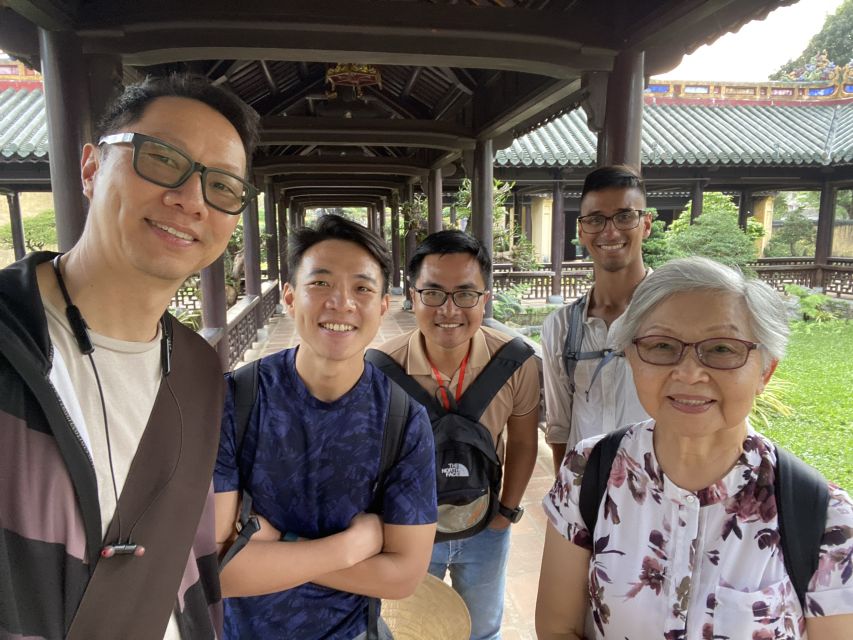
You’ll notice how guides such as Matthew and Dang are repeatedly praised for strong English explanations and for building trust in how they guide your route and answer questions. That matters on a walking tour because the best moments are the ones you didn’t plan for—when someone notices you’re curious about a detail and explains it clearly instead of letting you guess.
Further out to the Nguyen kings and their tombs
Inside the Imperial City: Hien Lam Cac Pavilion, Mieu Temple, and the Queen Mother Residence
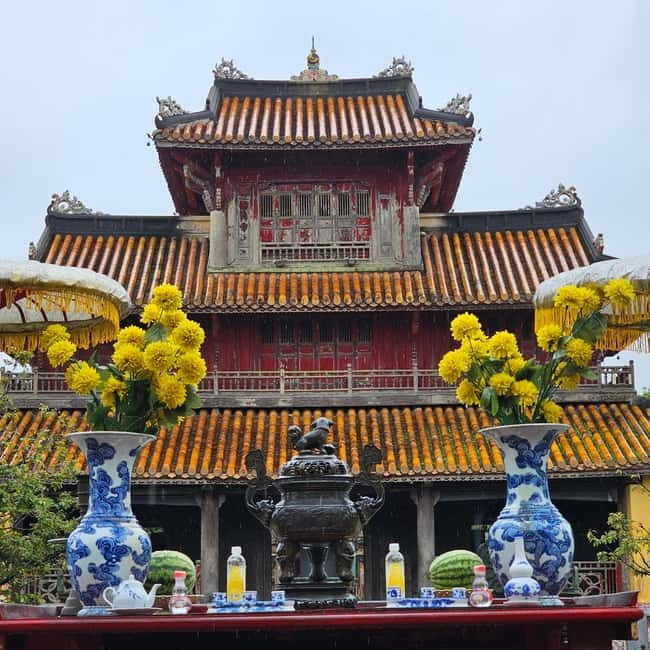
The tour moves through key parts of the Imperial City, and the included stop list gives you a clear sense of where the guide will take you.
Hien Lam Cac Pavilion
You’ll see the Hien Lam Cac Pavilion, a place that fits the name because pavilions are all about viewing and presence. Even if you don’t know the technical vocabulary, you’ll be prompted to look at how the space supports ceremony and visibility. Think of it as architecture for status: where you stand and what you can see becomes part of the story.
Mieu Temple
Next up is the Mieu Temple. The guide’s job here is to help you understand why religious or ritual spaces inside an imperial setting were not separate from politics. On this tour, you’ll learn to connect temple spaces to how authority was expressed and reinforced.
Queen Mother Residence
Then comes the Queen Mother Residence. This is one of those stops where you start feeling the structure of the court more than just the outlines of buildings. Even with limited time, the guide helps you grasp why that residence mattered and how court roles shaped movement and access within the complex.
At each stop, you’ll get a mix of architectural cues and historical context. The result is that you leave not just with photos, but with a mental map of how spaces relate to power.
The Purple Forbidden City: Kien Trung Palace and the Royal Garden
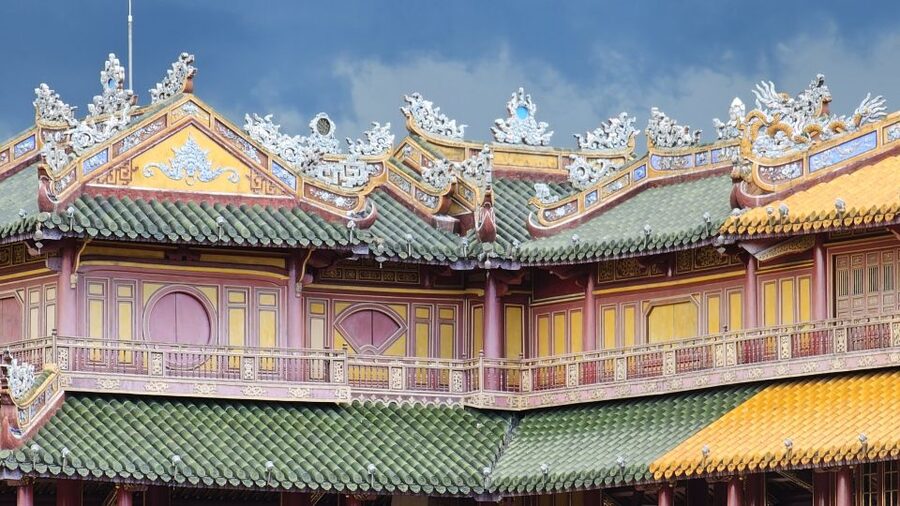
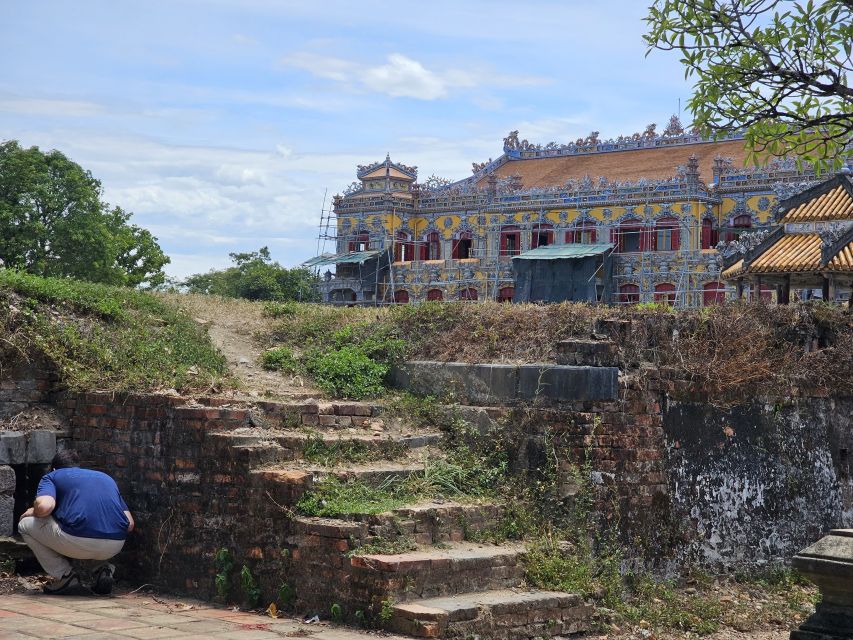
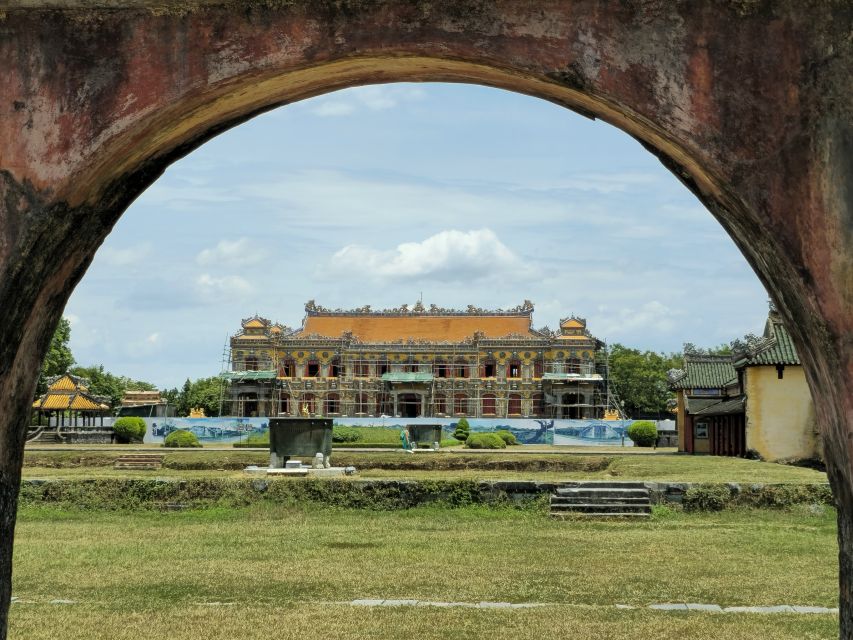
The tour’s name already hints at the atmosphere: Forbidden City areas are supposed to feel restrictive, and Hue delivers that mood through layout. One of the main highlights is the Purple Forbidden City, including Kien Trung Palace and the Royal Garden.
Kien Trung Palace
At Kien Trung Palace, expect the guide to connect design to court authority. Palaces like this aren’t just big rooms; they’re built around rules of who belongs where and when. The walk helps you understand that the Nguyen court used architecture to enforce hierarchy and control movement.
You’ll also hear about the architectural thinking behind the site. One standout topic from this experience is the way engineers approached real-life challenges like flood water management and even wind currents. That kind of practical detail makes the structures feel less like relics and more like problem-solving.
Royal Garden
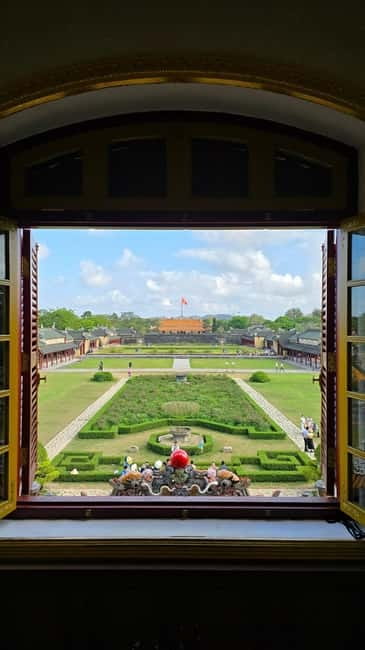
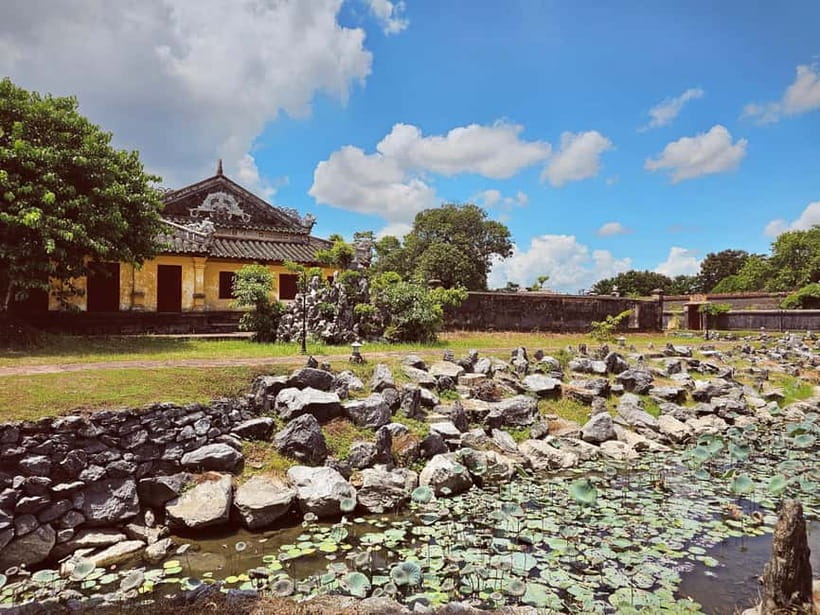
Then you’ll step into the Royal Garden, where the tone shifts. Gardens inside a royal complex often show how aesthetics, ceremony, and daily life can be shaped together. Here, the guide helps you notice how nature and design were handled in the service of the court, instead of being treated as random scenery.
Architecture, court engineering, and why the Nguyen era ended
Two big themes run through the tour: architecture as messaging, and history as cause-and-effect.
You’ll learn more about Nguyen Dynasty architecture and what kind of influences guided construction—whether feng shui ideas or weather conditions played a bigger role. The guide doesn’t just drop trivia. The goal is to help you look at the site and decide what seems intentional versus accidental.
The tour also covers the downfall of the Nguyen Dynasty, with an emphasis on the reasons behind it. Even when you only have 2.5 hours, this topic lands because it reframes the site. You start seeing the imperial complex as something built for a specific political world—then you learn what broke that world.
Add to that the court intrigue angle, and you’ll feel the era as a mix of power, rules, engineering, and human conflict.
Morning tours and the 8 a.m. Changing Guard at Ngo Mon Gate
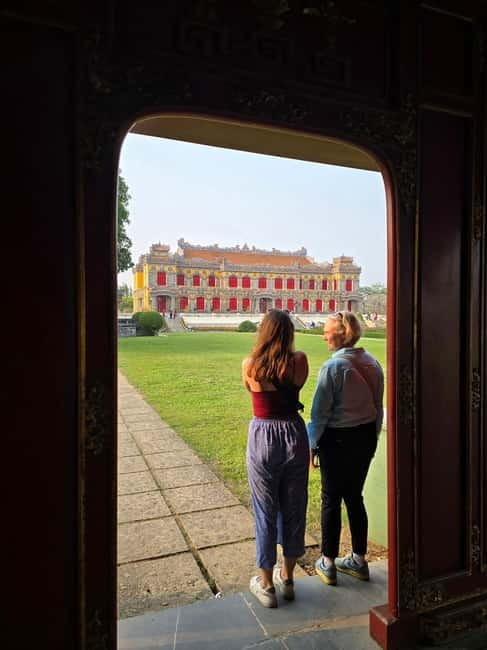
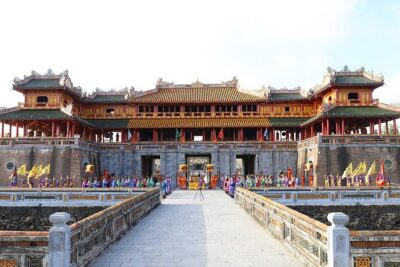
If you book the morning option, you get a bonus. At 8:00 a.m., you can watch the Changing Guard Ceremony in front of the Ngo Mon Gate.
This is worth it if you like live ritual moments. It adds energy right at the front of the day, and it gives you a visual anchor for everything the guide explains later. Without it, the site can feel more static. With it, you connect history to a moving performance.
The only trade-off is that mornings in Hue can still feel warm fast. If you’re sensitive to heat, plan to start early, hydrate, and keep your pace steady.
Optional royal tombs: extending the story beyond the citadel
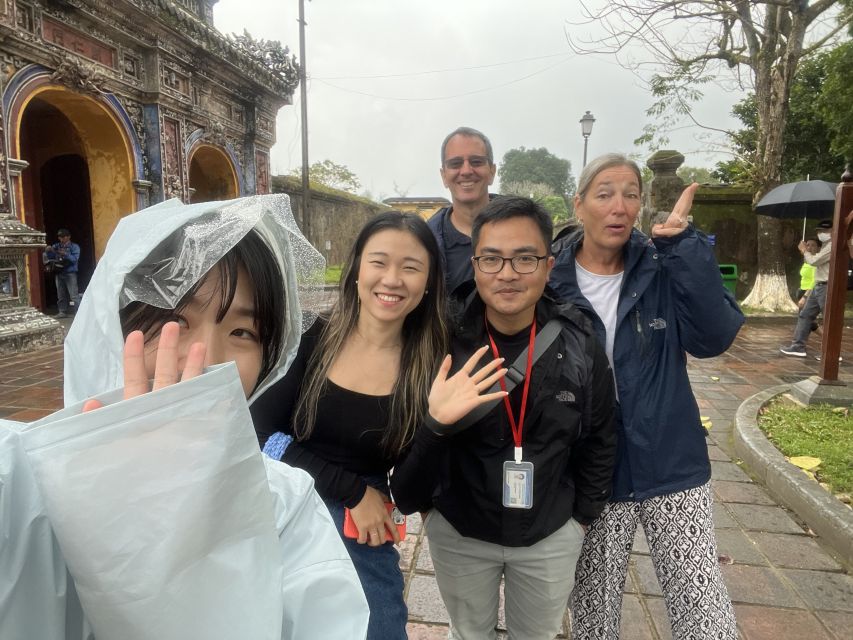
The experience is built around Hue Imperial City, and there’s an optional choice to add royal tombs. If you want the Nguyen story to continue after the palace world, tomb visits are the logical next step.
One useful planning tip: some guides for this Hue area also help coordinate follow-on days. For example, one guide named Matthew has been associated with a next-day plan that included two kings’ tombs and Dong Ba Market. That’s not guaranteed as part of every add-on, but it shows the kind of extra guidance you can ask for if you want to keep history and local life in the same arc.
If you add tombs, do it because you enjoy the larger timeline. Palaces tell you how power was displayed. Tombs often help you understand how the same power wanted to be remembered.
Price and logistics: what you pay $26 for, and what you don’t
The listed price is $26 per person, which is a fair rate for a guided walking tour focused on a major UNESCO site. You’re paying for the guiding fee, not for site admission.
The part people most often forget: the entrance ticket costs 200,000 VND per person and is not included. So your real budget is the tour price plus the entry ticket, and you should expect to spend time at the gates.
Also note: the price can vary based on the option you choose. If you’re picking morning vs. other options or adding tomb time, read the option details carefully so you know exactly what’s covered.
Then there’s the practical reality of Hue weather. Hue is often hot and humid from May to August, so bring more water than you think you need. Walking inside stone complexes can feel cooler for a bit, then heat catches up fast once you’re outside again.
Who this Hue Imperial City tour fits best
This tour is a strong match if you want more than a photo walk. You’ll like it if you care about architecture, court roles, and how the site was shaped by both ideas and real-world conditions.
It’s also a great option if you want a better pace. The tour runs as a small group, so you can actually keep up, ask questions, and follow the guide’s flow from one named stop to the next.
I’d also point you here if you enjoy strong English explanations. Guides such as Matthew and Dang are repeatedly praised for their clear command of English and patient, professional approach. One guide named Tom has even been credited with French-language explanations, which can be handy if you prefer another language for history.
If you want total freedom to wander, you might prefer a self-guided visit. But if you want the meaning of the place to click, this guided format is where the value is.
Should you book this Hue Imperial City walking tour?
Yes, I think you should book it if your goal is to understand the Nguyen Dynasty through the spaces that were built for it. The 2.5-hour format is long enough to make the site feel logical, and the historian-style guiding keeps you from getting lost in details that don’t connect.
Skip it or adjust your expectations if you’re only looking for casual wandering and you’re not interested in architecture and court stories. Also, go in prepared for extra site costs since the 200,000 VND entrance fee is separate, and bring water if you’re visiting in hot months.
If you want the most value, book the morning option if you can handle early starts. The 8 a.m. Changing Guard at Ngo Mon Gate pairs well with the rest of the day’s explanations.
FAQ
How long is the Hue Imperial City walking tour?
The tour lasts about 2.5 hours.
What is included in the price?
The included part is the guiding fee.
Is the entrance ticket included?
No. The entrance ticket is 200,000 VND per person and is not included.
Where do we meet the tour guide?
Meet at the 4-cannon side of the Nine Holy Cannons. The 5-cannon is on the opposite side.
Does the guide contact you before the tour?
Yes. The guide will text you via WhatsApp before the meeting to confirm everything is going smoothly.
What language is the tour offered in?
The tour is offered in English.
Is this a small group tour?
Yes, it’s a small group for better tour quality.
Is there a morning bonus?
If you book the morning tour, you can watch the Changing Guard Ceremony at 8 a.m. in front of Ngo Mon Gate.
Does the tour include royal tombs?
Royal tombs are an optional add-on choice.
What should I bring in summer?
Hue can be hot and humid from May to August, so bring more water.
If you want, tell me your travel month and whether you plan to add tombs, and I’ll help you pick the best option for pacing.
More Tour Reviews in Hue Vietnam
- Hue Customizable Tour with Imperial Citadel & Forbidden City
★ 4.9 · 937 reviews - Hue :Exploring Royal City with Multi Options and Dragon Boat
★ 5.0 · 675 reviews - Hue City Tour Full Day – Group Tour
★ 4.7 · 518 reviews - From Hue: DMZ Tour with Vinh Moc Tunnels and Khe Sanh Base
★ 4.9 · 503 reviews - Hue: Private Car to Hoi An via Fabulous Stops
★ 5.0 · 371 reviews - From Hue: Hoi An Bus Transfer with 4 Sightseeing Stops
★ 4.6 · 366 reviews
The Resting Places of the Nguyen Kings
- Hue: Royal Tombs & Pagoda Private Tour By Dragon Boat & Car
★ 4.9 · 257 reviews - Hue: Royal Tombs Private Tour with 3 Best Tombs & Pagoda
★ 4.9 · 213 reviews - Hue: Dragon Boat, Perfume River, Pagoda & Royal Tomb Tour
★ 4.9 · 194 reviews - Hue: Hue Royal Tombs Tour Visit 3 Best Tombs & Pagoda
★ 4.9 · 170 reviews - Hue: Private Dragon Boat, Pagoda, and Royal Tomb Tour
★ 4.8 · 141 reviews - Hue Imperial Citadel, Tombs, Perfume River Boat Tour & Van
★ 4.8 · 76 reviews
Deeper Inside the Imperial Citadel
- Hue Customizable Tour with Imperial Citadel & Forbidden City
★ 4.9 · 937 reviews - Hue :Exploring Royal City with Multi Options and Dragon Boat
★ 5.0 · 675 reviews - Hue Imperial Ancient City Walking Tour
★ 4.8 · 308 reviews - From Da Nang/Hoian/Hue: Hue Imperial City Full-Day Tour
★ 4.8 · 295 reviews - Hue Imperial City Walking Tour: Citadel & Forbidden City
★ 4.8 · 245 reviews - Hue Imperial Citadel, Tombs, Perfume River Boat Tour & Van
★ 4.8 · 76 reviews
Latest Hue Tours We Have Written Up






Imperial City & Citadel Tours, compared.
 ★ 4.9Hue Customizable Tour with Imperial Citadel & Forbidden CityFrom $12937 reviews
 ★ 5.0Imperial City Walk, Motorbike Tour & Private Car OptionsFrom $7732 reviews
 ★ 5.0Exploring Royal City with Multi Options and Dragon BoatFrom $12675 reviews
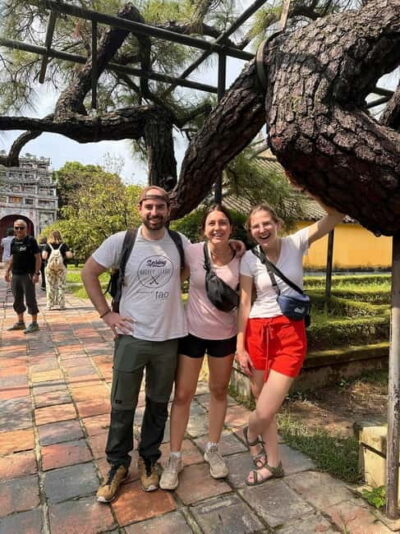 ★ 4.8Hue Imperial Ancient City Walking TourFrom $2308 reviews
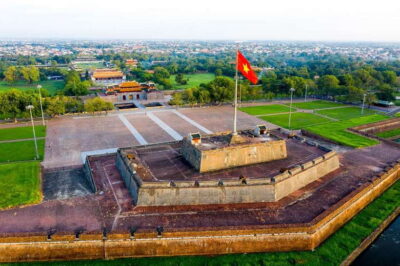 ★ 4.8From Da Nang/Hoian/Hue: Hue Imperial City Full-Day TourFrom $31295 reviews
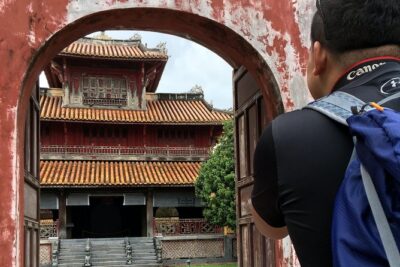 ★ 5.0Hue Imperial City Walking Tour: Citadel & Forbidden CityFrom $9280 reviews
★ 4.8Hue Imperial City Walking Tour: Citadel & Forbidden CityFrom $11245 reviews
★ 5.0Hue Imperial City Walking Tour: Citadel & Forbidden CityFrom $9280 reviews
★ 4.8Hue Imperial City Walking Tour: Citadel & Forbidden CityFrom $11245 reviews
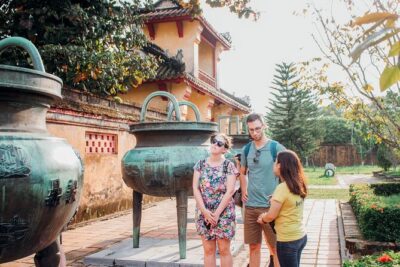 ★ 5.0Hue Imperial City Walking Tour (Kids Half-Price)From $29133 reviews
Browse the lists this tour appears in