

Reviewed · IMPERIAL CITY & CITADEL TOURS
Hue: Hue Walking Tour to Imperial Citadel with Tour Guide
Hue’s palace maze makes sense with a guide. This Hue Imperial City walking tour stitches together the reigns of 13 Nguyen kings and the court rules behind the royal family’s day-to-day world.
I like how the English-speaking guide keeps the complex palace layout readable, turning stone gates and empty courtyards into stories. I also love the variety of stops: you shift from ceremonial entrances to the coronation palace, then on to the royal theater, garden spaces, pavilions, and the Nine Dynastic Urns.
One drawback to plan for: entrance tickets aren’t included, and it’s still a real walking route inside a large citadel complex—so good shoes matter, especially if you’re visiting in warmer hours.
In This Review
- Key highlights worth planning for
- Planning your 2 to 2.5 hour Hue Imperial City walk
- Finding your start point at Cuu Than Cong in Cua Ngan
- Ngo Mon Gate and Flag Tower: ceremonial power in stone
- Thai Hoa Palace: the coronation room you can feel in your feet
- Forbidden Purple City boundaries and the harem story
- Duyet Thị Đường Royal Theater and the rhythm of court entertainment
- Kiến Trung Palace: when Nguyen court design meets Europe
- Cung Diên Thọ and the Queen Mother’s residence details
- Nine Dynastic Urns and Hien Lam Pavilion: ritual objects and rules
- Price and logistics: what you actually get for $15
- Who this walking tour fits best in Hue
- Should you book this Hue Imperial Citadel tour
- FAQ
- How long is the Hue Imperial Citadel walking tour?
- Does the guide speak English?
- Where do we meet for the tour?
- Are entrance tickets included?
- What’s included in the price?
- Can I choose a morning or afternoon start?
Key highlights worth planning for

- English guide with you the whole time so you can ask questions, not just hear facts
- 150 minutes that cover the Imperial Citadel core without feeling rushed
- Ceremonial architecture focus from main gates to coronation spaces
- Court secrets explained, including how the harem and palace access worked
- Great photo moments at key landmarks along the route
- Private group option if you want your pace and questions
More time inside the Citadel walls
- Hue Customizable Tour with Imperial Citadel & Forbidden City★ 4.9 · 937 reviews
- Hue Imperial Ancient City Walking Tour★ 4.8 · 308 reviews
- From Da Nang/Hoian/Hue: Hue Imperial City Full-Day Tour★ 4.8 · 295 reviews
- Hue Imperial City Walking Tour: Citadel & Forbidden City★ 4.8 · 245 reviews
Planning your 2 to 2.5 hour Hue Imperial City walk
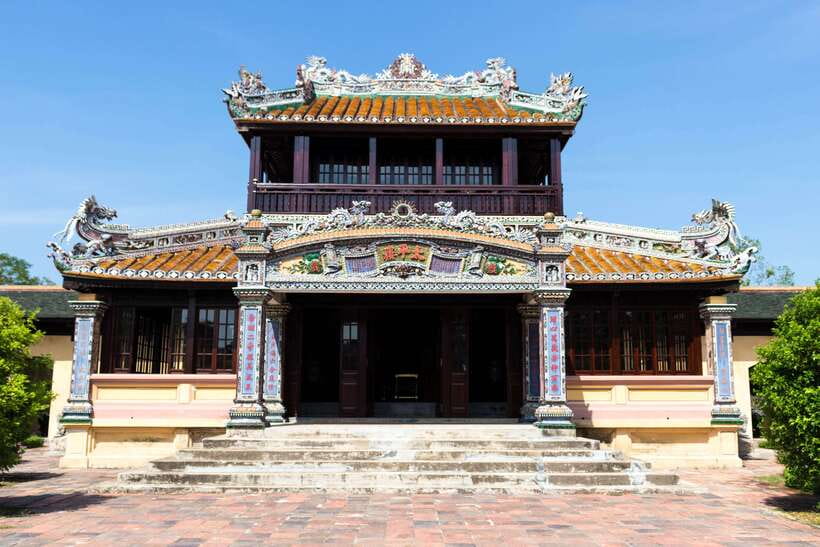
This tour runs about 150 minutes (2 to 2.5 hours), and you can pick a morning or afternoon slot. That length is perfect for first-timers: long enough to learn the structure and power system of the Nguyen court, short enough to still enjoy the rest of your Hue day.
You’ll walk around the Imperial City area at a guided pace. Expect regular photo stops and short guided segments, rather than one long speech—useful if you want to keep moving and still understand what you’re seeing.
There’s also a private group available, which tends to work well when you want deeper answers or you’re traveling as a couple or small group and don’t want to follow the energy of strangers.
Finding your start point at Cuu Than Cong in Cua Ngan
Your guide meets you at Cuu Than Cong in Cua Ngan (Nine Holy Cannons). You should look for a welcome sign with your name, so it’s easier to spot your guide quickly.
If you selected pickup, the driver meets you at your hotel reception lobby and takes you to the start area. Either way, you’ll begin with the practical part first: getting squared away, then handling ticket purchasing with your guide’s help before you start walking.
This “meet, organize, then go” flow matters here because the citadel is big and easy to feel lost in. With a guide at the front, you spend your time learning instead of wandering.
Ngo Mon Gate and Flag Tower: ceremonial power in stone
The tour starts by focusing on the city’s most public symbols: gateways and the structures tied to court display.
First up is the Flag Tower (Ky Dai Hue), where the royal court used to hang the flag for official display. It’s the kind of landmark you can see from many angles, but a guide helps you understand why it mattered—this wasn’t decoration; it was authority made visible.
From there, you’ll visit Cua Ngo Mon (the main gate area connected to Ngo Mon Hue, built in 1833 under King Minh Mang). This gate is described as an architectural relic and an important main gate of the royal palace, often used as a ceremony platform in major events of the Nguyen dynasty.
What I like about starting with these spots is that you get the logic of the complex early. Gates aren’t just entrances; they’re part of the rules of who could go where and when.
Hue on foot, a handful more routes



Thai Hoa Palace: the coronation room you can feel in your feet
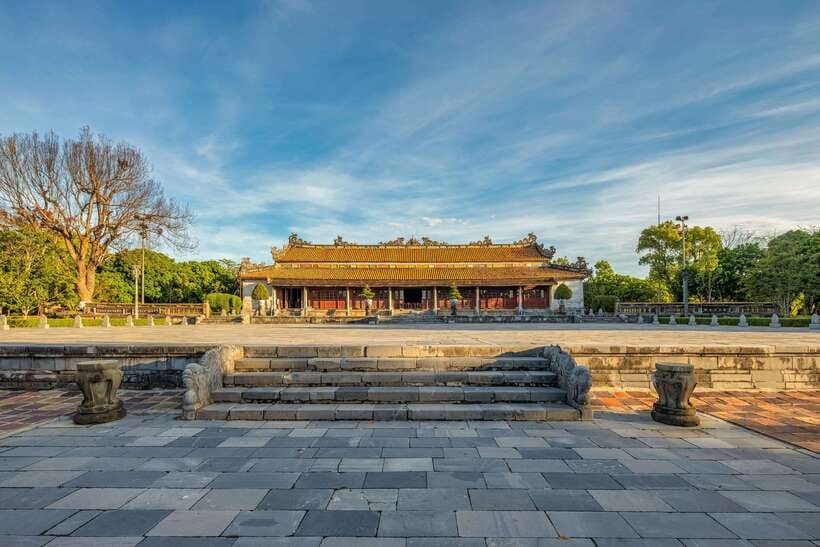
Next, you reach Thái Hòa Palace (Thai Hoa Palace). The big idea here is simple: this is the coronation place for 13 Nguyen dynasty kings, which tells you why the space sits at the center of royal power.
Even if you’ve never studied Vietnamese dynastic history, a guide can help you read the architecture as a system. The palace design communicates hierarchy and authority through placement, access, and formal movement—so when you stand there, you’re not just looking at buildings. You’re looking at a political stage.
There’s also a stop around the Hue Historic Citadel area. It gives you context for how the palace and court spaces relate to the wider citadel layout.
A quick consideration: a coronation-focused stop can feel abstract if you don’t have time to ask questions. If you’re curious about court life, say it early to your guide—this is the moment to connect architecture to real rules and real people.
Forbidden Purple City boundaries and the harem story
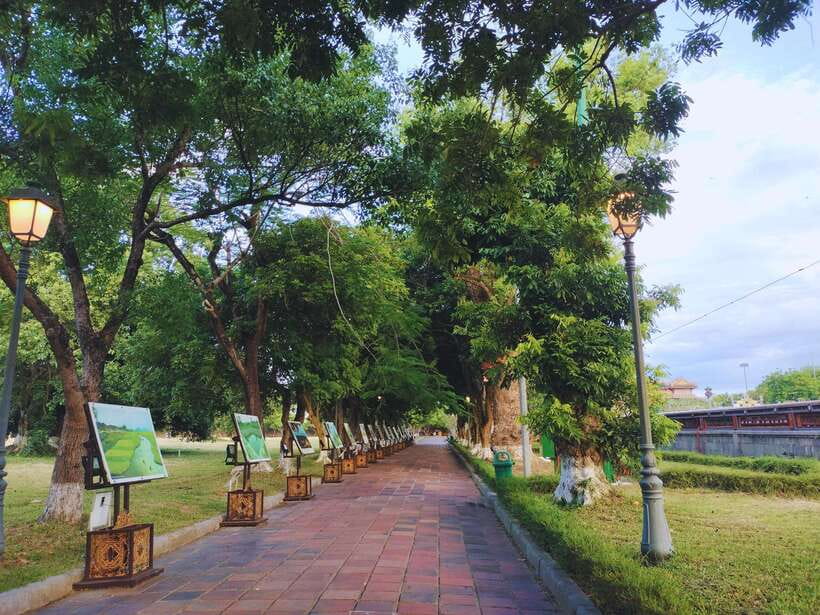
Some of the most interesting learning happens when the guide explains how access worked inside the royal core. You’ll hear about the Forbidden Purple City (Tử Cấm Thành Huế)—reserved for the king and royal family, with restricted access for non-duty officials and civilians.
This is where the tour’s “court secrets” angle becomes practical. Instead of just hearing that the king had power, you learn how that power was physically enforced through boundaries and permissions.
The harem element fits here too. The guide’s job is to make the palace system understandable, including the idea that life behind closed walls ran by strict rules. It helps you see the complex as a place with social structure, not just a collection of old buildings.
Duyet Thị Đường Royal Theater and the rhythm of court entertainment
You’ll then visit Duyet Thị Đường Royal Theater (Duyệt Thị Đường), one of four theaters constructed during the Nguyen dynasty, and noted as the oldest preserved theater from that era. This stop is easy to overlook if you think palaces only mean ceremonies and power, but it adds a human layer.
A theater inside a royal citadel tells you the court wasn’t only ceremonial. There was performance, spectacle, and an audience—even if the audience worked under strict social limits.
After the theater, the route continues into calmer, more detailed spaces: Thiệu Phương Garden and the Thai Binh Pavilion area. These are smaller, slower moments in the middle of the walk, and they give your brain a break from “big gate, big palace” thinking.
If you enjoy photos, these garden-and-pavilion stops tend to be where you can slow down and frame something more personal. If you’re short on time, they’re still worth it because they show how the court balanced public authority with private spaces.
Kiến Trung Palace: when Nguyen court design meets Europe
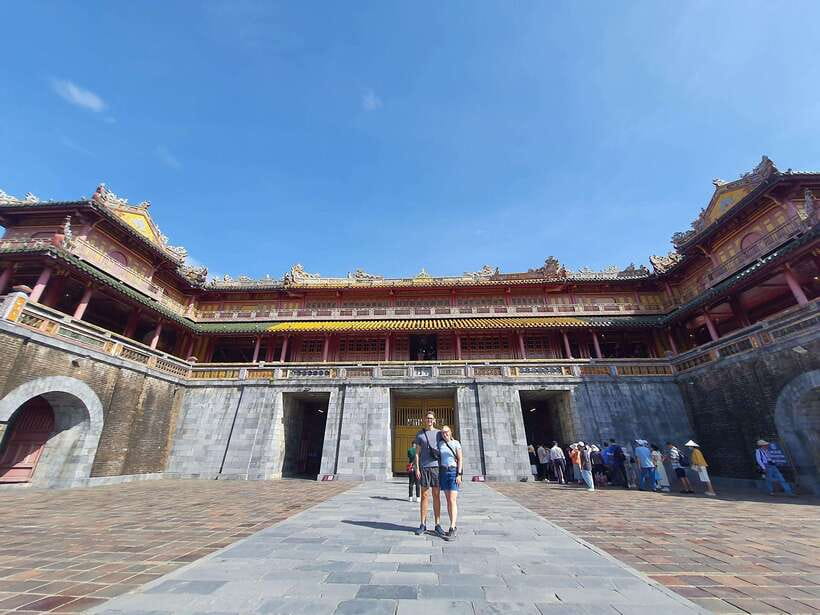
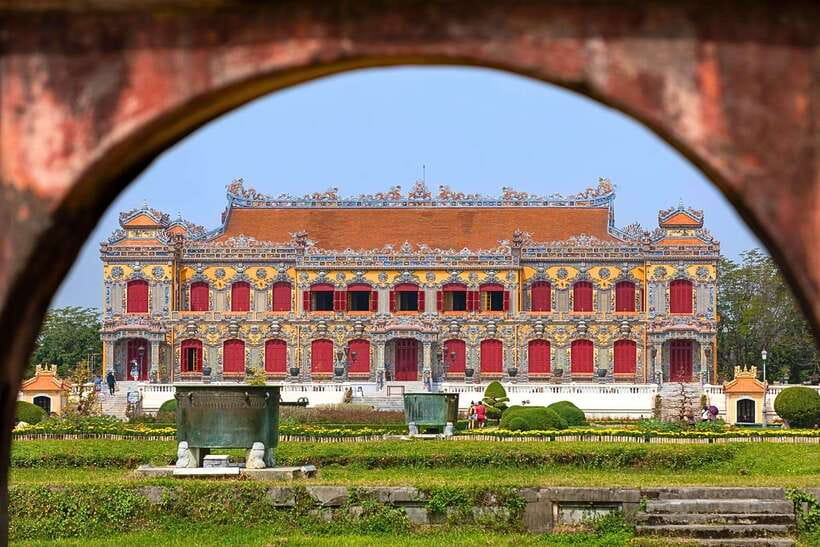
One of the more striking contrasts comes at Kiến Trung Palace (Điện Kiến Trung). This palace was built in 1923 by Emperor Khải Định (Khai Dinh) and stands out because it uses a European-inspired style, blending elements connected to Italian Renaissance and French classicism.
Around it, you’ll see how unusual that shift is compared with the more traditional Vietnamese architecture in the surrounding complex. With a guide, the point isn’t just that it looks different—it’s what the design signals about time, influence, and the emperor’s message.
Photo stops and a guided walkthrough here make sense because the architectural cues can be subtle if you’re just scanning. A good guide helps you spot what’s intentional, not accidental.
Cung Diên Thọ and the Queen Mother’s residence details
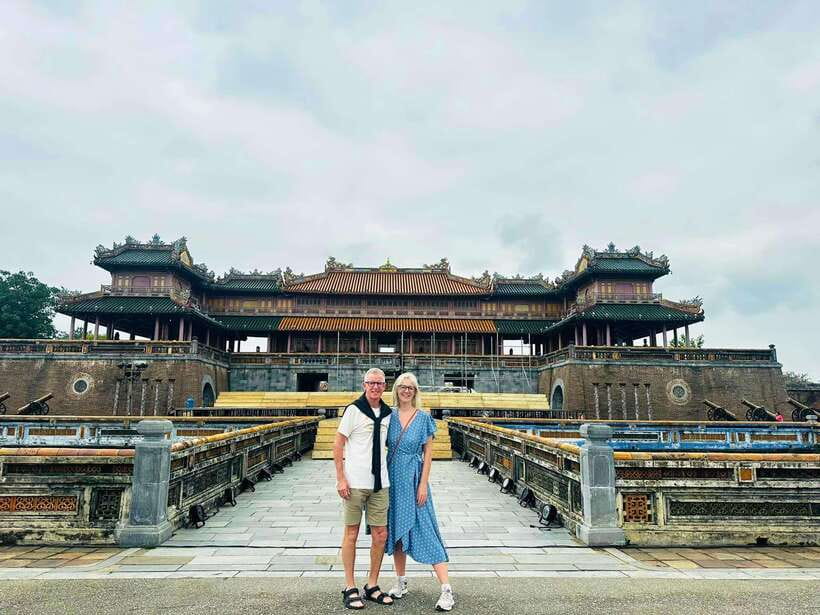
Next is Cung Diên Thọ (Dien Tho Palace). This palace is described as a large-scale project with intricately carved details and an elegant style, and it served as the Queen Mother’s residence.
For me, this part of the tour changes the mood. The coronation story is big and public, while the Queen Mother’s residence is about presence—daily influence, status, and refined living. A guide’s explanations make the carvings and scale feel purposeful instead of decorative.
There’s also a short walk and guided time allocation here so you can take in the space. If you’re someone who likes to ask questions, this is another good moment—residences can open up the conversation about how royal families actually organized their lives.
Nine Dynastic Urns and Hien Lam Pavilion: ritual objects and rules
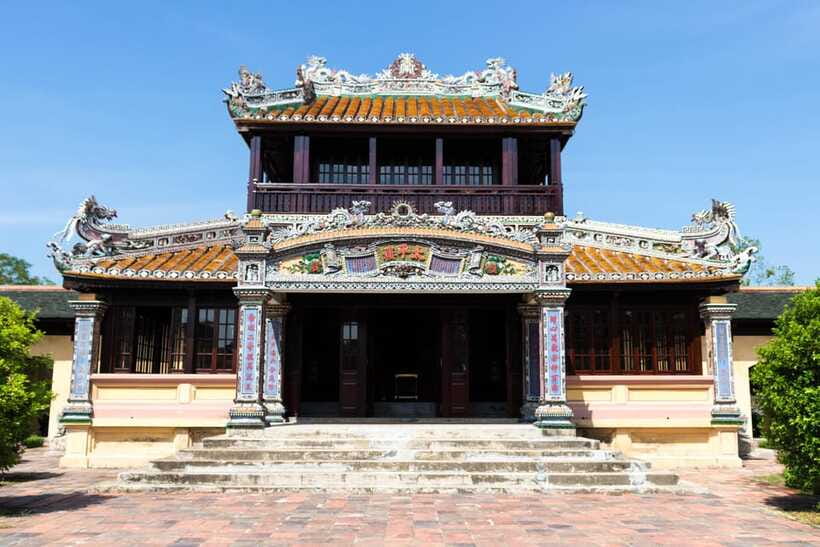
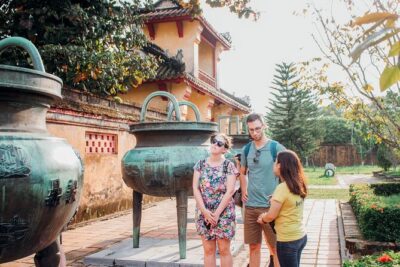
The tour continues to the Nine Dynastic Urns (Cửu Đỉnh Huế), commissioned by Emperor Minh Mang in 1835. These stand out because they’re not just sculptures; they’re part of a ritual and worship landscape.
The information you’ll receive ties the urns to The Mieu (Thế Miếu Huế)—a temple area dedicated to worshiping the 10 kings of the Nguyen dynasty. Even though you may not spend a long block of time inside every sacred space, understanding the urns’ role changes how you look at them.
After that, you’ll visit the Hien Lam Pavilion, with photo stops and a guided explanation. Pavilions are often “in-between” spaces—places for rest, viewing, or formal placement. With context, they become part of the citadel’s choreography.
Practical tip for this section: your photos will benefit from time. The guide’s pace here matters because you’re moving from royal objects and ritual meaning into a more visual space you’ll want to capture from multiple angles.
Price and logistics: what you actually get for $15
At $15 per person for about 150 minutes, this is decent value for Hue—especially because the tour includes an English-speaking guide, bottled water, and local insurance. In other words, you’re paying for interpretation and guidance inside a complex historical site.
Two items to keep in mind:
- Entrance tickets are not included, so you’ll need to budget for those separately.
- Tip isn’t included, so you should decide in advance what feels fair for your guide.
If you’re comparing options, I’d treat this as a “buy clarity” purchase. The citadel is large and easy to misread without context. You’ll get the logic of the court, the meaning of key buildings, and the story threads connecting gates, ceremonies, and restricted palace life.
The private-group option also makes value feel better if you’re traveling as two or more people who want a calmer pace and more back-and-forth.
Who this walking tour fits best in Hue
This tour is a strong fit if you:
- Want an English explanation of the Nguyen dynasty’s power structure and major royal spaces
- Appreciate architecture with meaning (gates, palaces, theater, ritual objects)
- Prefer asking questions in real time instead of just walking and hoping you understand
It may be less ideal if you:
- Don’t enjoy walking through a large complex
- Want minimal talking and only self-paced wandering
- Are mainly there for quick photos with no interest in court rules or palace access
If you’re visiting Hue for the first time, this is one of the easiest ways to avoid that classic “we saw a lot, but I can’t connect it” feeling.
Should you book this Hue Imperial Citadel tour
I’d book it if you want your time inside the citadel to feel organized and meaningful. The route focuses on the most important royal story points—main ceremonial gates, Thai Hoa Palace, court theater, the Queen Mother’s residence, and the Nine Dynastic Urns—so you leave with a map in your head, not just pictures on your phone.
You’ll also like it if you value a guide who can keep things moving and answer questions clearly. Different guides bring different energy—some are described as funny and quick to answer, others as exceptionally patient and detailed—so booking a guided walk is the safest way to get a strong experience.
If entrance tickets are a sticking point for your budget, plan for them early. Once that’s sorted, this tour is a practical way to get real context without spending your whole Hue day in transit.
FAQ
How long is the Hue Imperial Citadel walking tour?
The tour runs about 150 minutes, with total programming time listed as 2 to 2.5 hours.
Does the guide speak English?
Yes. The tour includes an English-speaking guide.
Where do we meet for the tour?
Your guide meets you at Cuu Than Cong in Cua Ngan (Nine Holy Cannons).
Are entrance tickets included?
No. Entrance tickets are not included.
What’s included in the price?
The tour includes an English-speaking guide, bottled water, and local insurance.
Can I choose a morning or afternoon start?
Yes. You can choose between a morning or afternoon slot for the program.
The Old Capital on Foot
- Hue Imperial Ancient City Walking Tour
★ 4.8 · 308 reviews - Hue Imperial City Walking Tour: Citadel & Forbidden City
★ 4.8 · 245 reviews - Eat like a local with a local – Walking Tour
★ 4.9 · 57 reviews - Hue Imperial City and Forbidden City Walking Private Tour
★ 4.9 · 42 reviews - Hue Imperial city walking tour and optional royal tombs
★ 4.7 · 19 reviews - Hue Walking Street Food Tour
★ 5.0 · 6 reviews
More Tour Reviews in Hue Vietnam
- Hue Customizable Tour with Imperial Citadel & Forbidden City
★ 4.9 · 937 reviews - Hue :Exploring Royal City with Multi Options and Dragon Boat
★ 5.0 · 675 reviews - Hue City Tour Full Day – Group Tour
★ 4.7 · 518 reviews - From Hue: DMZ Tour with Vinh Moc Tunnels and Khe Sanh Base
★ 4.9 · 503 reviews - Hue: Private Car to Hoi An via Fabulous Stops
★ 5.0 · 371 reviews - From Hue: Hoi An Bus Transfer with 4 Sightseeing Stops
★ 4.6 · 366 reviews
Deeper Inside the Imperial Citadel
- Hue Customizable Tour with Imperial Citadel & Forbidden City
★ 4.9 · 937 reviews - Hue :Exploring Royal City with Multi Options and Dragon Boat
★ 5.0 · 675 reviews - Hue Imperial Ancient City Walking Tour
★ 4.8 · 308 reviews - From Da Nang/Hoian/Hue: Hue Imperial City Full-Day Tour
★ 4.8 · 295 reviews - Hue Imperial City Walking Tour: Citadel & Forbidden City
★ 4.8 · 245 reviews - Hue Imperial Citadel, Tombs, Perfume River Boat Tour & Van
★ 4.8 · 76 reviews
Latest Hue Tours We Have Written Up






Imperial City & Citadel Tours, compared.
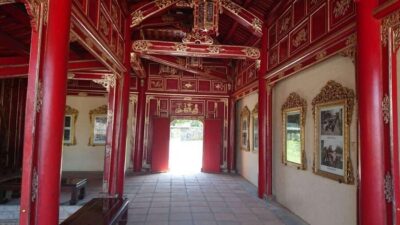 ★ 4.9Hue Customizable Tour with Imperial Citadel & Forbidden CityFrom $12937 reviews
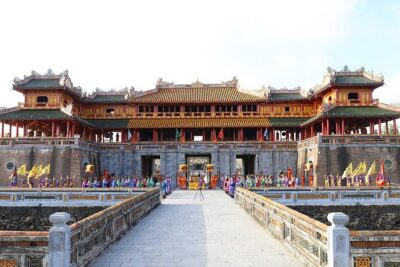 ★ 5.0Imperial City Walk, Motorbike Tour & Private Car OptionsFrom $7732 reviews
 ★ 5.0Exploring Royal City with Multi Options and Dragon BoatFrom $12675 reviews
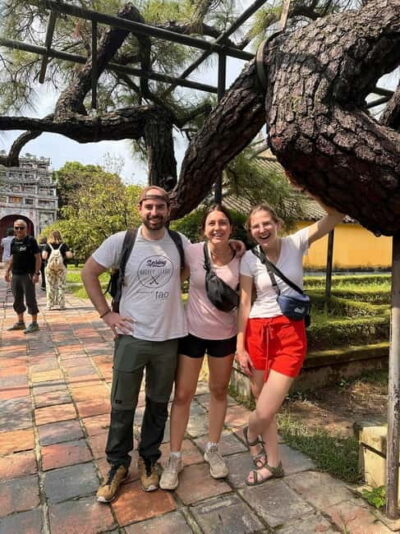 ★ 4.8Hue Imperial Ancient City Walking TourFrom $2308 reviews
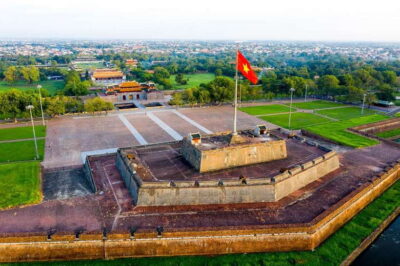 ★ 4.8From Da Nang/Hoian/Hue: Hue Imperial City Full-Day TourFrom $31295 reviews
 ★ 5.0Hue Imperial City Walking Tour: Citadel & Forbidden CityFrom $9280 reviews
★ 4.8Hue Imperial City Walking Tour: Citadel & Forbidden CityFrom $11245 reviews
★ 5.0Hue Imperial City Walking Tour: Citadel & Forbidden CityFrom $9280 reviews
★ 4.8Hue Imperial City Walking Tour: Citadel & Forbidden CityFrom $11245 reviews
 ★ 5.0Hue Imperial City Walking Tour (Kids Half-Price)From $29133 reviews
Browse the lists this tour appears in