
Reviewed · ROYAL TOMBS TOURS
Hue Royal Tombs Tour: Visit Best Pagodas & Mausoleums
Hue can feel big, but these tombs read fast. You’ll get a custom itinerary built around Hue’s top imperial sites and pagodas, plus local expert guidance that explains how Nguyen kings lived, including wives, concubines, and eunuchs. The one thing to plan for is that tomb entry tickets are not included, so you’ll want to budget and maybe use combo passes.
In practice, this is a private car day that saves your legs and your patience. You’ll also get time to photograph, pause, and wander at each stop instead of being forced into a speed-run. Just note that food and drinks aren’t included, so bring water and a simple plan for a snack break.
In This Review
- Key highlights you’ll actually feel
- Hue Royal Tombs Tour: what you get for $15 and 2–8 hours
- A practical reality check
- Price and ticket planning: what’s extra and how to avoid wasting money
- Private car logistics: how the day stays comfortable between sites
- Tu Duc Tomb: where the king worked, lived, and designed his own world
- Minh Mang Tomb: the 15-hectare court city built across family roles
- Khai Dinh Tomb: the European-Orient blend that looks modern even today
- Gia Long Mausoleum: a founder’s complex, not one single tomb
- Dong Khanh Tomb (Tu Lang): rural setting, dense architecture, two-part layout
- Thien Mu Pagoda: Hue’s famous Buddhist landmark with a legend origin
- Tu Hieu Pagoda (Root Temple): where mindfulness meets Hue’s spiritual life
- Pace, breaks, and photo time: how to make it feel like a day, not a schedule
- What kind of traveler this fits (and who should adjust)
- Guides and drivers: why names matter for your experience
- Should you book the Hue Royal Tombs Tour?
- FAQ
- How long is the Hue Royal Tombs Tour?
- What does the tour price include?
- Are tomb entry tickets included?
- Can I customize which sites to visit in Hue?
- Where can I be picked up?
- Is the tour available in English and is it wheelchair accessible?
Key highlights you’ll actually feel
- Personalized order of sites so you can match the day to your interests
- Minh Mang, Tu Duc, Khai Dinh as the core trio of Nguyen mausoleums
- Nguyen court details: queens, concubines, and eunuchs inside the story
- Buddhist landmarks like Thien Mu and Tu Hieu to explain Hue beyond the emperors
- Private transport that makes scattered sites workable in one outing
Further out to the Nguyen kings and their tombs
- Hue: Royal Tombs & Pagoda Private Tour By Dragon Boat & Car★ 4.9 · 257 reviews
- Hue: Dragon Boat, Perfume River, Pagoda & Royal Tomb Tour★ 4.9 · 194 reviews
- Hue: Hue Royal Tombs Tour Visit 3 Best Tombs & Pagoda★ 4.9 · 170 reviews
- Hue: Private Dragon Boat, Pagoda, and Royal Tomb Tour★ 4.8 · 141 reviews
Hue Royal Tombs Tour: what you get for $15 and 2–8 hours
This tour is built for a very specific need: Hue’s royal sites are spread out, and they’re not all close together. The $15 price is for the tour service itself, with private pickup and drop-off in the Hue city center plus private transportation. Depending on the option you choose, you may also have an English-speaking guide with you for commentary in real time.
The big value isn’t just seeing famous tombs. It’s that you can shape the day. You’re not locked into one fixed route, which matters in Hue where the right pace can make the difference between rushed photos and real understanding.
You should also know what the tour is designed to teach: imperial Vietnam through the Nguyen dynasty, and Buddhist life through Hue’s pagodas. The tour’s wording and stop choices make it clear the goal is not only architecture, but the human story behind it—especially how rulers, their households, and their staff lived within these huge walled complexes.
A practical reality check
Even with private transport, this is still a temple-and-tomb day. Expect walking inside large complexes, photo stops, and breaks. If you’re the type who hates stairs or uneven ground, you’ll want to go slow and use your free time wisely.
Price and ticket planning: what’s extra and how to avoid wasting money
The tour price itself is only part of the cost. Tomb entry tickets are 150,000 VND per tomb and food/drinks aren’t included. That can feel annoying at first, but it also gives you control: you can buy the exact combination that matches how many tombs you plan to see.
There’s also a combo pass option for the Imperial City plus tombs. The numbers provided are:
- 420,000 VND per person for Imperial City with 2 tombs
- 530,000 VND per person for Imperial City with 3 tombs
And it’s valid for two days.
Here’s how to think about value. If you’re doing the Imperial City anyway, the combo pass can be a smarter way to pay than buying separate tomb tickets the day-of. If you’re only focused on the royal tombs and pagodas, you can stick to tickets as you go. Either way, you’ll enjoy the day more if you buy tickets before you’re standing at the gates with time ticking away.
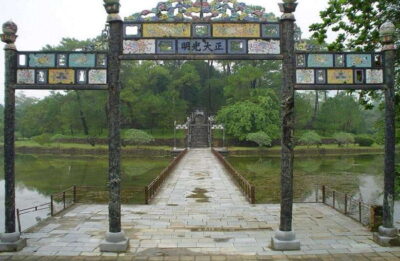
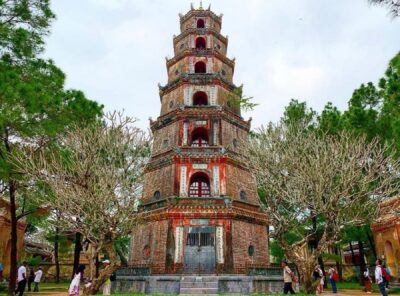
The tower at Thien Mu, and other pagodas

Private car logistics: how the day stays comfortable between sites
Hue’s royal tombs aren’t all clustered like a single museum district. So the private car/van part matters, because it cuts down on long waits and reduces the need to coordinate with other people. Pickup is flexible in the Hue city center area, and you can also be picked up from Hue Train Station if that’s easier for your schedule.
The schedule includes travel time between stops and built-in breaks and photo pauses. That combination is what keeps the day from turning into a checklist. If you want a calmer pace, use the free time at each site to step away from the main path, find shade, and let the layout make sense.
Tu Duc Tomb: where the king worked, lived, and designed his own world
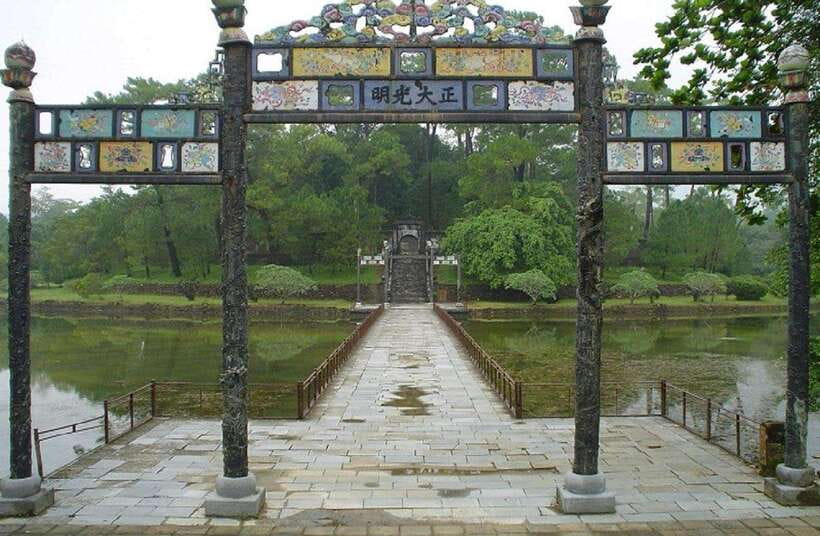
Tu Duc is one of those places where the size and layout do the storytelling for you. The tomb was built by King Tu Duc for himself from 1864 to 1867, and it wasn’t only a future burial project. It also served as a place where he sometimes lived and worked while he was still alive.
What I love about Tu Duc’s design concept is the contrast between public monument and private life. The complex covers about 12 hectares, and it’s split into two separated areas: a temple area and a burial area. That separation is useful because it forces you to slow down and notice how different spaces serve different purposes.
After Tu Duc died in 1883, the tomb also became part of the living arrangement for his minor wives, concubines, and eunuchs. That detail is easy to miss if you only look at the architecture. With a good English guide, you’ll understand the tomb as a system for court life, not just a single final resting place.
What to watch for: wear shoes you can walk in for a full spread of paths inside the complex. Also, if you’re someone who likes photo time, Tu Duc is one of the better spots to ask for a longer pause since there’s lots of visual rhythm.
Minh Mang Tomb: the 15-hectare court city built across family roles
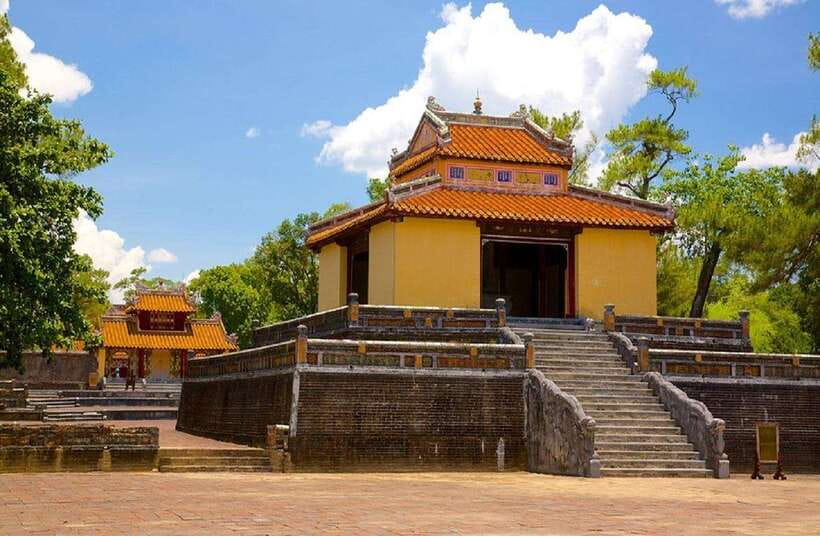
Minh Mang’s tomb turns the concept of a royal residence into something physical. Construction began in 1840 and ran 1840–1843 under King Minh Mang, but he died during construction. The project was later finished by his son, King Thieu Tri (1840–1847).
The tomb covers about 15 hectares for the king, queen, and related household. There are 26 buildings for different functions, which is why Minh Mang can feel like walking through a small walled community rather than a single monument. If you like site layouts, this is a highlight.
One of the most compelling parts of Minh Mang’s story is who lived inside the complex. After Minh Mang’s death in 1840, the area included living spaces for minor wives and concubines (noted as having no children for him) and for eunuchs. In other words, the tomb wasn’t simply a memorial. It was also a continuation of ordered household life.
A useful way to approach Minh Mang: treat it like a neighborhood with different “jobs.” Let your guide’s explanation help you connect building function to court roles. That’s where the tomb stops being scenery and becomes a lived system.
Khai Dinh Tomb: the European-Orient blend that looks modern even today

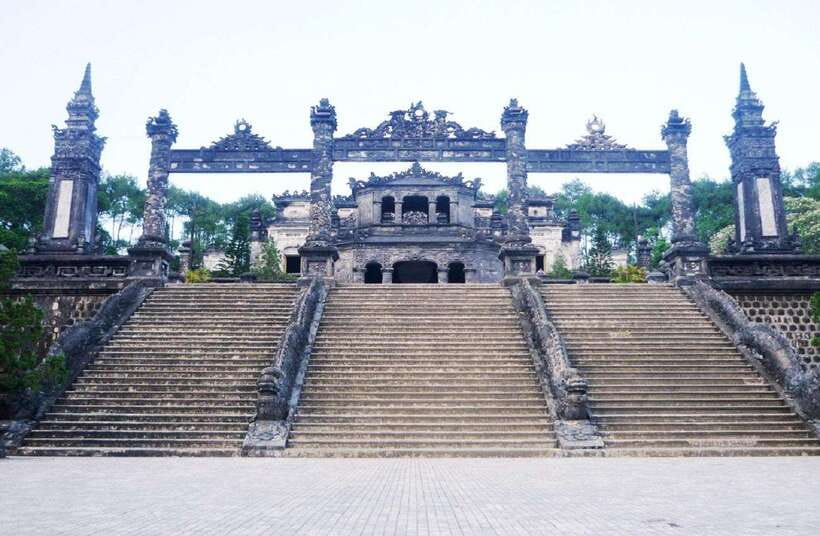
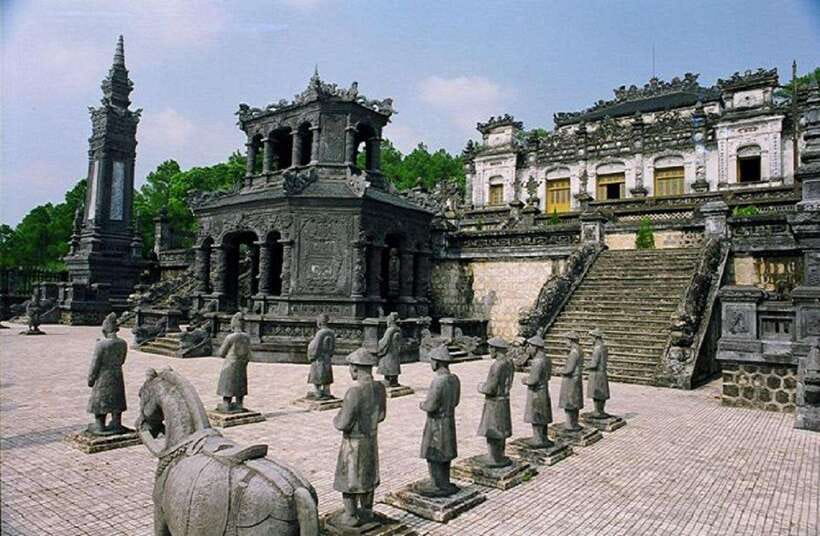
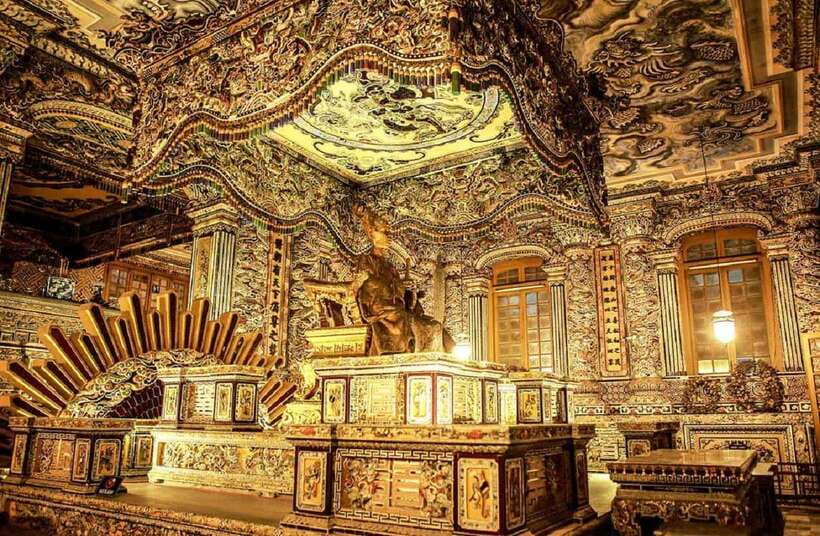
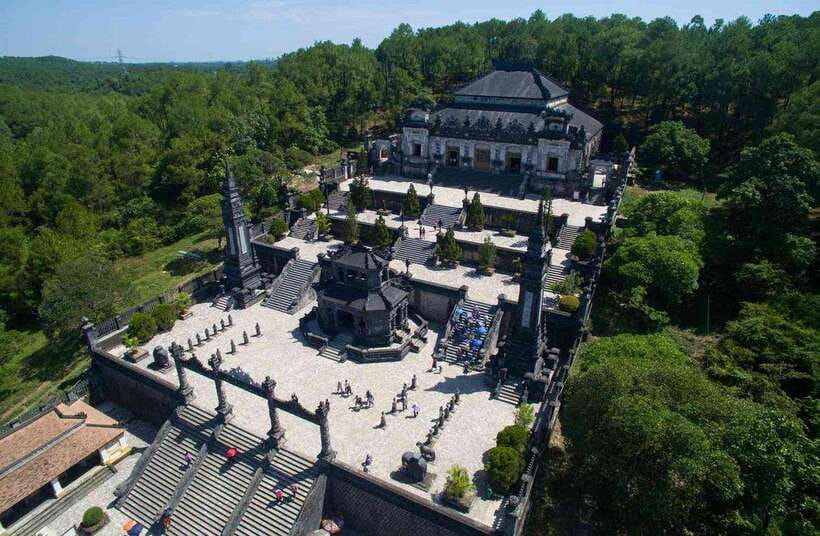
Khai Dinh’s tomb is the one that tends to catch your eye immediately, because the design concept is different. Built from 1920 to 1931, it started under Khai Dinh from 1920–1925, then construction continued under his child from 1925–1931 after his death.
The key detail is that Khai Dinh’s tomb is described as the only Nguyen royal tomb with blended styles of Orient and European. That blend isn’t just a vague label—this is the stop where style becomes the lesson. You can see the cross-influence in the way the complex feels and how the tomb’s visual identity separates it from the more traditional tone of earlier mausoleums.
The footprint is also huge: 48.5m x 117m. Bigger sites can overwhelm you, so plan to use your guided time to get oriented first, then take photos during your own free time.
Another detail that gives the tomb extra meaning: it’s noted that the king was buried underneath his tomb. That’s a reminder that in these places, what you see above ground is only part of the story.
Gia Long Mausoleum: a founder’s complex, not one single tomb
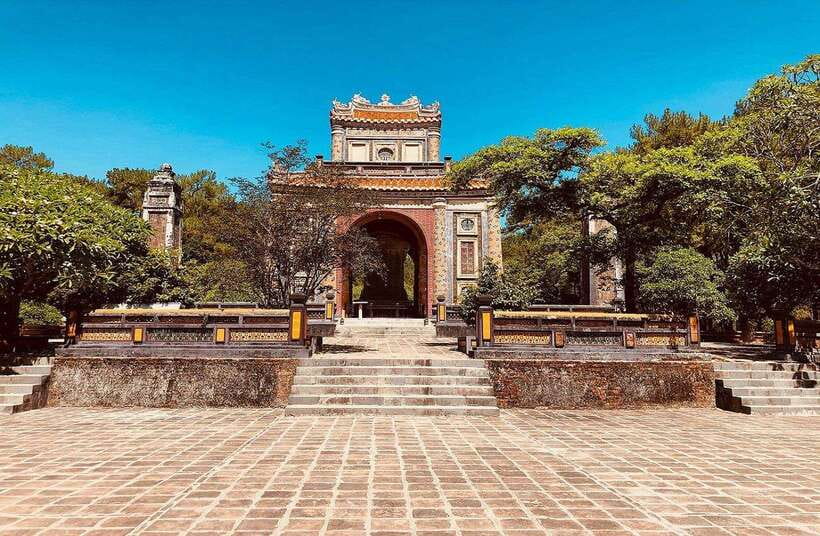
If you want the Nguyen dynasty story to feel complete, Gia Long is the stop that adds context. Construction of the mausoleum began in 1814 and finished in 1820, and it honors Emperor Gia Long (1762–1820), the founder of the Nguyen dynasty.
One practical detail that helps you appreciate this site: Gia Long Mausoleum is actually a complex of many royal mausoleums. So instead of one focal point, you’re dealing with a larger cluster of royal burial spaces.
It’s located in Long Ho Ward, Phu Xuan District, in Hue City. The setting matters because it feels like the empire extending beyond the most famous tourist zones. If you’re curious about how imperial power connects to geography, Gia Long gives you that broader sense.
Dong Khanh Tomb (Tu Lang): rural setting, dense architecture, two-part layout
Dong Khanh’s tomb is called Tu Lang and it sits in a more rural setting than the big-city feel you might expect. The burial place of Emperor Dong Khanh, it’s located in the middle of the countryside area of Thuong Hai village, in Thuy Xuan ward, Hue.
Architecturally, Dong Khanh is described as having about 20 large and small architectural works with relatively high density. That density is what makes it interesting for careful walkers. You’ll likely spend more time noticing the pattern of spaces rather than just looking for one main structure.
It’s also divided into two areas: a palace area and a tomb area. That split helps you understand the site as functional. The palace area implies the presence of everyday royal household life, while the tomb area becomes the memorial heart.
Practical tip: if your legs are getting tired by this point, use your guide time for orientation so you don’t feel lost. Then use the remaining free time for the sections you personally care about most.
Thien Mu Pagoda: Hue’s famous Buddhist landmark with a legend origin
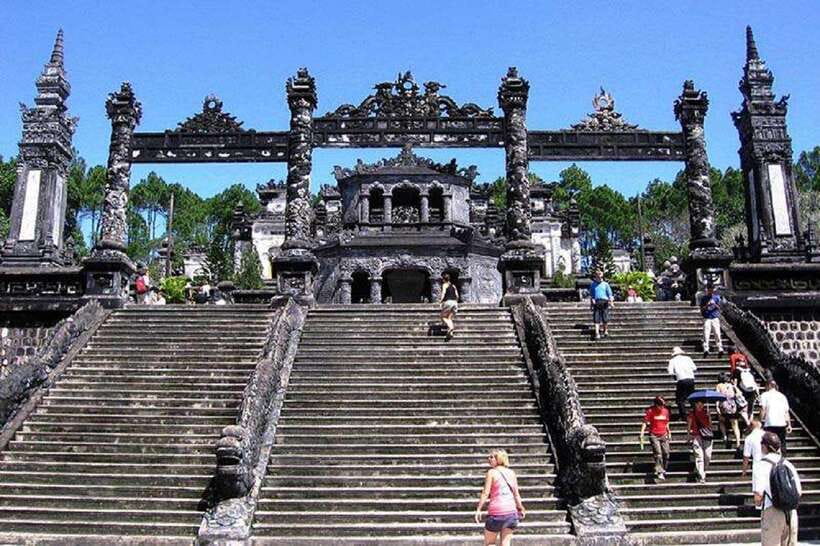
After tombs, Thien Mu gives you a different angle on Hue: faith and daily life. Thien Mu Pagoda was built in 1601, and it’s tied to the Nguyen family founder in Central Vietnam. The story included with the tour is that locals built it because of a dream.
That dream-origin detail matters because it connects religion to local belief, not only royal power. It helps explain why pagodas in Hue weren’t just monuments. They were part of how communities interpreted meaning and moved through life.
Thien Mu is also described as a famous religion spot, so it’s the kind of stop where you can learn about Buddhism’s importance to locals while still enjoying the atmosphere of an active spiritual place.
What to expect on the ground: expect walking and time for photos. If you’re doing this with a private car schedule, it’s a good moment to slow your pace after the tomb complexes.
Tu Hieu Pagoda (Root Temple): where mindfulness meets Hue’s spiritual life
Tu Hieu Pagoda is also known as the Root Temple and it’s described as one of Hue’s greatest temples. This is the pagoda stop with a modern spiritual connection included in the tour description: Zen Master Thich Nhat Hanh is living there after returning to Vietnam from the US.
That fact alone gives the place a different feeling than a typical museum-like temple visit. The tour frames him as a global spiritual leader, poet, and peace activist, revered for mindfulness, global ethics, and peace. Even if your spiritual interest is minimal, the presence of a figure like that changes how you relate to the space.
The program also notes walking/hiking time at this stop, so plan comfortable shoes and sun protection. If you’re the kind of person who likes quieter spiritual spaces, Tu Hieu tends to be the type of place where you can let your thoughts catch up after the more structured tomb tours.
Pace, breaks, and photo time: how to make it feel like a day, not a schedule
The tour includes breaks, photo stops, guided time, and free time at each major site. That’s a good structure for Hue, because the sites can be visually impressive but also emotionally heavy if you speed through them.
Here’s how I’d use your time if you want the most out of it:
- Start each site with the guide’s explanation, then wander at your own pace.
- Use free time to sit, not just move. These complexes are made for stillness.
- Ask your guide to point out how different parts of the complex relate to court life, not only architecture.
One thing I like about how this tour is described is the focus on real people: how kings lived, who was inside the household, and how Buddhism shaped local life. When you understand that, even a short pause in the right spot can feel meaningful.
What kind of traveler this fits (and who should adjust)
This tour fits you best if you want:
- a private plan with pickup and drop-off in Hue
- a coherent view of Nguyen royalty through Minh Mang, Tu Duc, Khai Dinh
- pagodas that explain Buddhist life as part of Hue’s identity
It also works well if you already bought a pass for the Imperial City and tombs. With a private schedule, you can take the mausoleums at your own pace instead of feeling forced into another timed-entry loop.
You might want to think twice if you want only quick photos with almost no walking. Even with private transport, tomb and pagoda complexes are built to be walked.
Guides and drivers: why names matter for your experience
The quality of your day often comes down to how the guide connects the stones to real life. In this tour, English guides and attentive drivers are part of what people praise.
You may see names like Bi and Duy associated with clear, helpful explanations and a calm pace that doesn’t rush your time at each site. Tra My is also mentioned as a strong guide for the mausoleums. For drivers, names like David show up with praise for being attentive and careful on the long stretches between monuments.
One guide connection that’s especially useful: Ba is described as sharing practical advice, including tips on transfers and where to exchange money, and even taking someone to taste a local specialty like salted coffee. Food isn’t included, but having a guide who’s comfortable making real-world recommendations can improve your whole Hue day.
Should you book the Hue Royal Tombs Tour?
Yes, I think you should book this tour if you’re doing Hue for the first time and you want the cleanest path through the Nguyen tombs plus two major pagodas in one outing. The private transport, the built-in breaks, and the option to customize the order give you control—so you’re not stuck with a rigid checklist.
Book it especially if you care about context: the tour is designed to explain how emperors’ households worked and how Buddhism shaped local life. Those human details are what turn the day from monuments into a story you can remember.
Just be sure you plan for the extra tomb tickets and bring water. If you do that, this is a strong way to experience Hue’s imperial and spiritual side without wasting time.
FAQ
How long is the Hue Royal Tombs Tour?
The duration is listed as 2 to 8 hours, depending on the option and schedule. Check availability to see starting times.
What does the tour price include?
It includes pick-up and drop-off in the city center, plus private transportation by car or van. A tour guide is included for the option with a guide.
Are tomb entry tickets included?
No. Tomb entry tickets are listed as 150,000 VND per tomb. The tour also notes that combo passes may be available for the Imperial City and tombs.
Can I customize which sites to visit in Hue?
Yes. The tour description says you can customize your personal itinerary to visit the best sightseeing places in Hue.
Where can I be picked up?
Pick-up is available from city center hotels or anywhere in the Hue city center. You can also be picked up at Hue Train Station.
Is the tour available in English and is it wheelchair accessible?
The tour offers a live English tour guide (for the option with guide), and it is listed as wheelchair accessible.
More Tour Reviews in Hue Vietnam
- Hue Customizable Tour with Imperial Citadel & Forbidden City
★ 4.9 · 937 reviews - Hue :Exploring Royal City with Multi Options and Dragon Boat
★ 5.0 · 675 reviews - Hue City Tour Full Day – Group Tour
★ 4.7 · 518 reviews - From Hue: DMZ Tour with Vinh Moc Tunnels and Khe Sanh Base
★ 4.9 · 503 reviews - Hue: Private Car to Hoi An via Fabulous Stops
★ 5.0 · 371 reviews - From Hue: Hoi An Bus Transfer with 4 Sightseeing Stops
★ 4.6 · 366 reviews
Thien Mu and the Riverside Pagodas
- Hue: Royal Tombs & Pagoda Private Tour By Dragon Boat & Car
★ 4.9 · 257 reviews - Hue: Royal Tombs Private Tour with 3 Best Tombs & Pagoda
★ 4.9 · 213 reviews - Hue: Dragon Boat, Perfume River, Pagoda & Royal Tomb Tour
★ 4.9 · 194 reviews - Hue: Hue Royal Tombs Tour Visit 3 Best Tombs & Pagoda
★ 4.9 · 170 reviews - Hue: Private Dragon Boat, Pagoda, and Royal Tomb Tour
★ 4.8 · 141 reviews - Guided Private Tour – Explore Hue’s Royal Tombs & Thien Mu
★ 5.0 · 24 reviews
The Resting Places of the Nguyen Kings
- Hue: Royal Tombs & Pagoda Private Tour By Dragon Boat & Car
★ 4.9 · 257 reviews - Hue: Royal Tombs Private Tour with 3 Best Tombs & Pagoda
★ 4.9 · 213 reviews - Hue: Dragon Boat, Perfume River, Pagoda & Royal Tomb Tour
★ 4.9 · 194 reviews - Hue: Hue Royal Tombs Tour Visit 3 Best Tombs & Pagoda
★ 4.9 · 170 reviews - Hue: Private Dragon Boat, Pagoda, and Royal Tomb Tour
★ 4.8 · 141 reviews - Hue Imperial Citadel, Tombs, Perfume River Boat Tour & Van
★ 4.8 · 76 reviews
Latest Hue Tours We Have Written Up






Royal Tombs Tours, compared.
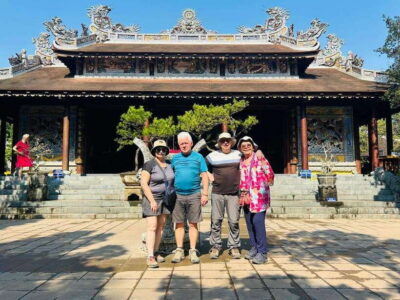 ★ 4.9Royal Tombs & Pagoda Private Tour By Dragon Boat & CarFrom $12257 reviews
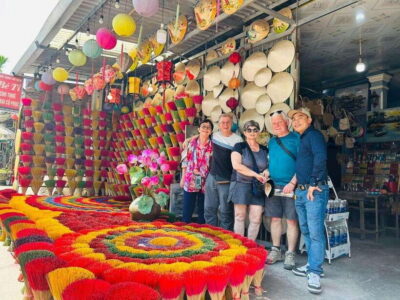 ★ 4.9Royal Tombs Private Tour with 3 Best Tombs & PagodaFrom $11213 reviews
 ★ 5.03 Tombs + Pagoda with Knowledgeable ES DriverFrom $31200 reviews
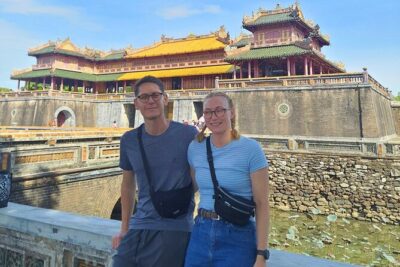 ★ 4.9Dragon Boat, Perfume River, Pagoda & Royal Tomb TourFrom $11194 reviews
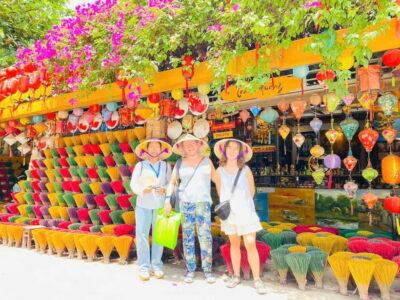 ★ 4.9Hue Royal Tombs Tour Visit 3 Best Tombs & PagodaFrom $11170 reviews
 ★ 4.8Private Dragon Boat, Pagoda, and Royal Tomb TourFrom $13141 reviews
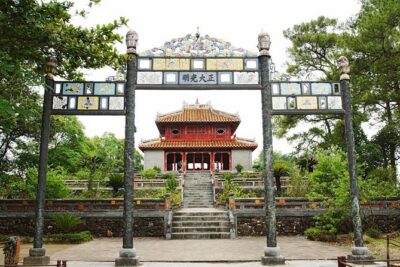 ★ 5.0Explore 3 Royal Tombs with Informative English-Speaking DriverFrom $2776 reviews
 ★ 4.8Hue Imperial Citadel, Tombs, Perfume River Boat Tour & VanFrom $2076 reviews
Browse the lists this tour appears in