
Reviewed · IMPERIAL CITY & CITADEL TOURS
Hue Imperial City Walking Tour maximum 12 pax
Hue’s imperial walls feel different up close. This small-group walk through the Imperial Citadel and Forbidden City turns big names like Gia Long into street-level stories. I like how the tour keeps you moving through major gates and palaces instead of stopping for a long lecture.
I also like the max 12-person size, which makes it easier to hear the guide and ask questions as you walk. One thing to keep in mind: it involves uneven steps and walking, so it may feel tough if you’re not used to hills and worn stone.
You’ll finish at a different point from where you start, which is great for seeing more—but you’ll want to plan your next stop. Overall, it’s a good value if you want a focused, guided route with lots of included admissions.
In This Review
- Key things to know before you go
- Why a 12-Person Walk Feels Right in Hue
- Price and Value: What $18 Really Covers
- Meeting Point and Route Logic: Start at Ngan Gate, Exit at Cửa Hiển Nhơn
- The Walk Itself: Pace, Steps, and Comfort Tips
- Stop-by-Stop: Imperial Power in 12 Key Scenes
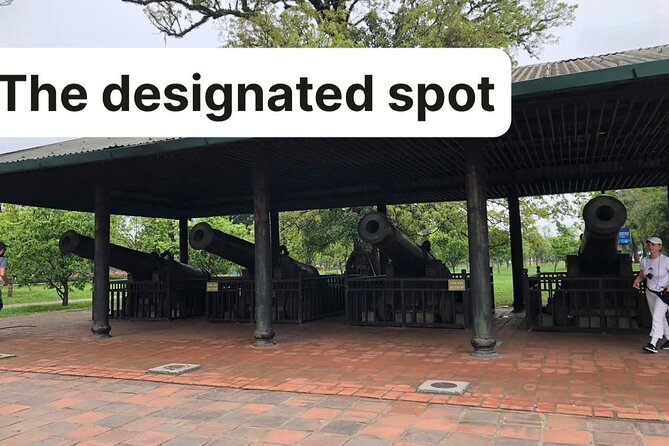
- Nine Holy Cannons (Cửu Vị Thần Công)
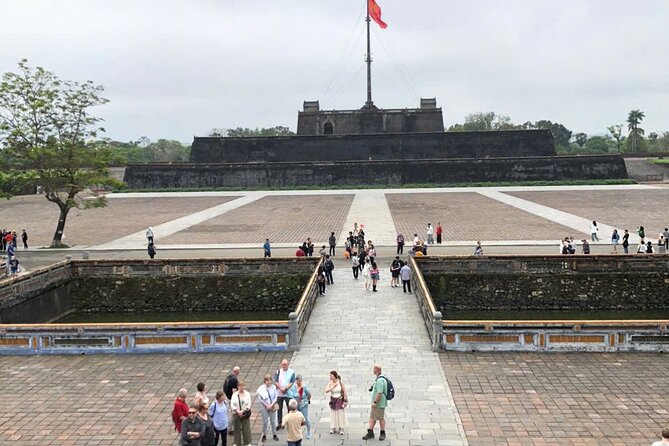
- The Flag Tower (Kỳ Đài)
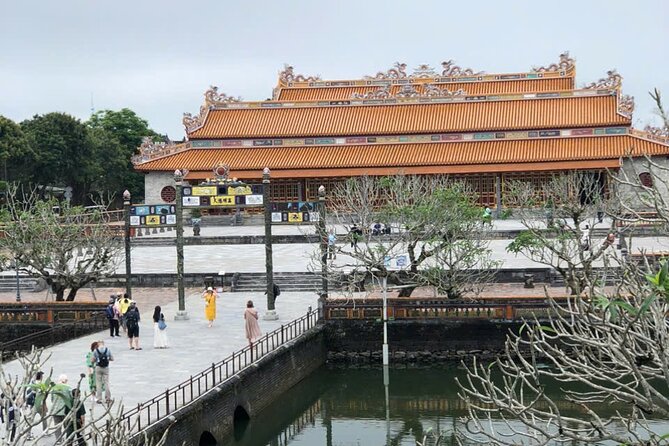
- Noon Gate (Cua Ngo Mon)
- Thai Hoa Palace (Palace of Supreme Harmony)
- Nine Dynastic Urns
- Mieu Temple (Thế Miếu)
- Hue Imperial City / Purple Forbidden City
- Kiến Trung Palace
- Truong Lang (Long Corridor)
- Thai Binh Palace / Hall of Peace (Thai Binh Lau)
- Duyet Thi Duong Theatre (Royal Theatre)
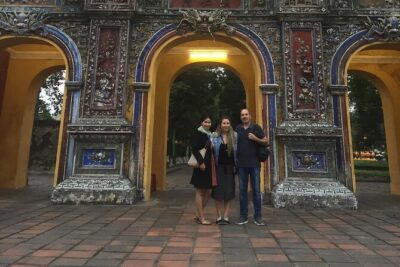
- Hien Nhon Gate
- The Guide Factor: How the Stories Land
- Who This Tour Fits Best (and Who Might Want Something Easier)
- Should You Book the Hue Imperial City Walking Tour?
- FAQ
- How long is the Hue Imperial City walking tour?
- How many people are on the tour?
- What’s included in the price?
- What’s not included?
- Where do I meet the guide?
- Where does the tour end?
- Can I get a full refund if my plans change?
Key things to know before you go
- Max 12 travelers keeps the pace human and the guide easy to hear
- 2 hours 30 minutes is long enough to cover the big set pieces without dragging
- English-speaking guide with lots of context as you pass gates, palaces, and temples
- Most entry tickets included, plus a couple of spots where entry is free
- Mobile ticket means less hassle on arrival
- Start at Cửa Ngăn (Ngan Gate) near the cannons; you’ll exit at Cửa Hiển Nhơn
More time inside the Citadel walls
- Hue: Imperial City Walk, Motorbike Tour & Private Car Options★ 5.0 · 732 reviews
- Hue Imperial City Walking Tour (Kids Half-Price)★ 5.0 · 133 reviews
- 3-Hours Hue Imperial Walking Tour with Guide with Lunch/ Dinner★ 5.0 · 125 reviews
- Hue Imperial City Tip-Based Walking Tour (Group Tour)★ 5.0 · 59 reviews
Why a 12-Person Walk Feels Right in Hue
Hue’s Imperial City is sprawling, and you can easily waste time wandering between highlights. This tour solves that by keeping the group small—up to 12 people—and sticking to a tight route you can actually finish in one morning or afternoon block.
I like small-group tours best here because the guide can adjust on the fly if you’re moving slower, pausing for photos, or asking what you’re looking at. You’re also less likely to get swallowed by a crowd when the space gets narrow around doors, gates, and courtyards.
The time target is about 2.5 hours. That’s a sweet spot: long enough to understand the “who lived where and why” logic of the complex, but not so long that you feel trapped in the same outfit and shoes.
Price and Value: What $18 Really Covers
At $18 per person, this is priced like a straightforward guided walk, not an all-day guided package. The biggest value comes from the fact that most stops include admission tickets, so you’re not paying surprise fees every time you turn a corner.
A few sections are marked as admission-free on the route, which helps keep your total out-of-pocket costs down. Also, this is a mobile ticket experience, so you’re not hunting for paper tickets when you’re already trying to find the right gate.
What’s not included matters for planning. Transportation to and from the meeting point isn’t included, and bottled water isn’t provided. If you’re going in warmer hours, I’d budget for buying water near where you’re staying, or carrying your own refillable bottle if that’s your style.
Finally, the booking pattern is a clue: this one is commonly reserved around 35 days in advance. With the 12-person cap, earlier booking increases your odds of fitting your schedule without last-minute stress.
Meeting Point and Route Logic: Start at Ngan Gate, Exit at Cửa Hiển Nhơn

You’ll meet the guide at Cửa Ngăn (Ngan Gate), specifically at the area with the cannons. That matters because Hue sites can be confusing when you arrive—knowing the exact meeting point keeps the first 10 minutes from turning into guesswork.
Your tour ends at Cửa Hiển Nhơn (the meeting info lists an address area near Đoàn Thị Điểm, Thuận Thành). Plan your next move with that in mind. It’s not a round-trip tour back to the start, so decide where you’ll head after you exit.
Also note the tour is near public transportation. If you’re hopping on and off buses or grabbing a rideshare, you’re in a workable area to connect your day.
Hue on foot, a handful more routes
The Walk Itself: Pace, Steps, and Comfort Tips
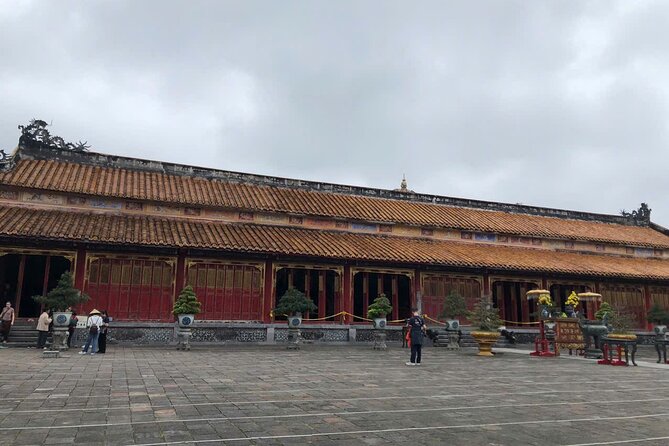
This is a guided walking tour with uneven steps and historic stone surfaces. One review mentioned difficulty with the steps for a 60+ sister who wasn’t very fit. That’s a good reminder: even if you can walk, the footing may still be the limiting factor.
If you want this to feel good rather than annoying, wear supportive shoes with grip. Bring water before you start, because bottled water isn’t included, and you’ll be moving for about two and a half hours.
Good news: service animals are allowed, and the tour says most travelers can participate. Still, I’d treat it as a “comfortable but not flat” stroll through an active, old fortress site—not an easy level promenade.
Stop-by-Stop: Imperial Power in 12 Key Scenes
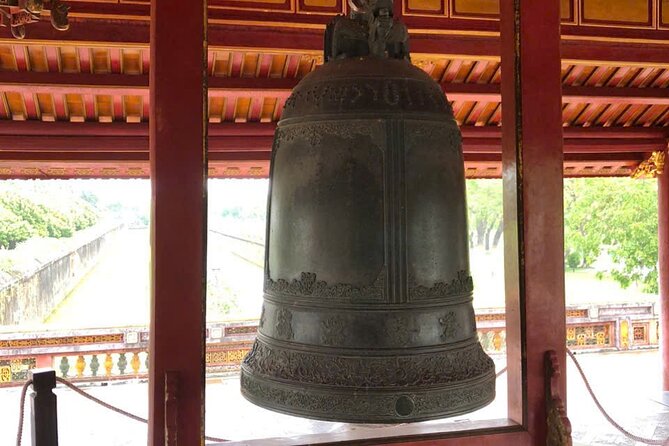
Here’s what you’re actually seeing, in order, and what each stop helps you understand.
Nine Holy Cannons (Cửu Vị Thần Công)
The route begins with the Nine Dynastic Cannons, cast during Emperor Gia Long in 1803 and completed in 1804. The cannons are bronze and tied to a specific reign, which makes them feel more than decorative. You’ll get a sense of how power was built into everyday public space—this wasn’t just about ceremonies inside walls.
This stop is short, but it sets the tone: the Nguyen dynasty’s mindset is about control, order, and visible authority.
The Flag Tower (Kỳ Đài)
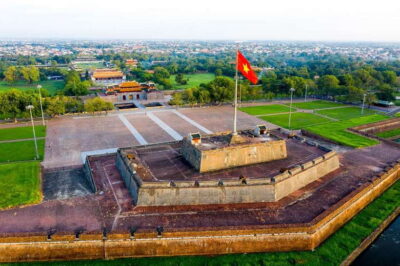
Next is the Flag Tower, a key point for major events during the Nguyen dynasty. The guide explains how ceremonies for festivals, celebrations, and public announcements were tied to places like this.
I like this stop because it shows you the purpose of architecture. It’s not just “pretty gate, pretty courtyard.” It’s built to function as part of court life and public communication.
Noon Gate (Cua Ngo Mon)
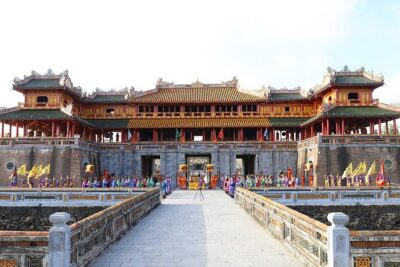
The Ngo Mon Gate is the main gate of the Imperial City and it was reserved for the emperor and the royal entourage. You’ll notice how the design communicates hierarchy through access—who can pass, who can’t, and what that means in practice.
This is a strong checkpoint stop. After you’ve seen it, many other parts of the complex make more sense.
Thai Hoa Palace (Palace of Supreme Harmony)
The Thai Hoa Palace is presented as the most important palace in the Imperial City. The guide connects it to significant imperial ceremonies and the role it played in court life.
This is where you’ll start seeing how “official” space works. Even without modern drama, the layout and scale make it clear why this palace mattered for public moments tied to authority.
Nine Dynastic Urns
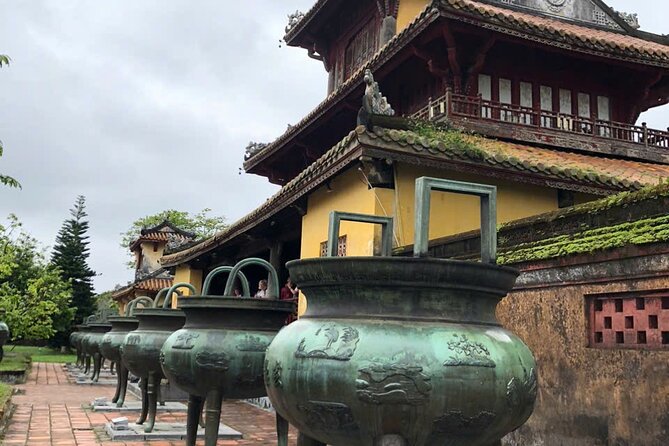
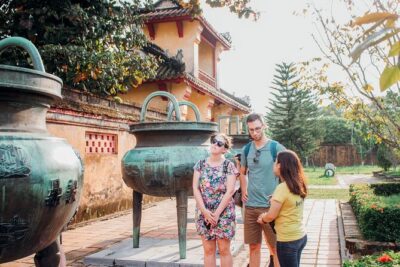
Then comes the Nine Dynastic Urns, cast between 1835 and 1837 under Emperor Minh Mang. Each urn is about 2.3 meters tall, so you get the physical sense of monumental intent.
What I find useful here is the way the guide connects objects to the message of dynastic rule. You’re not only learning about buildings—you’re learning how the state made its presence feel permanent.
Mieu Temple (Thế Miếu)
The Mieu Temple (Thế Miếu) was built in 1804 as a worship space for Nguyen emperors and their queens. The stop also ties in the honor given to great officials connected to the Nguyen Lords’ reign.
This is a good moment to slow down a bit mentally. It helps you understand the spiritual side of authority—how the court managed memory, respect, and legitimacy through dedicated spaces.
Hue Imperial City / Purple Forbidden City
The tour then reaches the Hue Imperial City, often described as the Purple Forbidden City. This is framed as the highest level of authority inside the Imperial City, reserved for the emperor and royal family. The guide also points out it’s the third level within the Imperial City.
This stop is the “now you get it” section. Once you’re here, the earlier gates and access rules aren’t abstract anymore. You can see the logic of separation.
Kiến Trung Palace
At Kiến Trung Palace, the focus shifts to later chapters of Nguyen rule. The palace was built in 1923 during Emperor Khai Dinh’s reign and served as the residence of the last two emperors: Khai Dinh and Bao Dai.
The way this stop is explained helps you place the Imperial City in time. You’re not only looking at the early 1800s—this route also shows the end of an era through how residences were used.
Truong Lang (Long Corridor)
Next is Truong Lang, the long corridor system inside the Forbidden Purple City. The guide explains how these corridors helped people move and communicate within the palace layout, reflecting the spatial division of the court.
I like this stop because corridors are where you learn the “how things worked day to day” details. Even if you’re focused on the grand gates, this gives you the human scale of movement.
Thai Binh Palace / Hall of Peace (Thai Binh Lau)
The Hall of Peace is described as a tranquil retreat for the emperor to rest, reflect, and compose poetry. In other words, it’s where authority pauses.
That contrast is useful. It turns the palace from a strict machine into a place with private moments, even for someone at the very top.
Duyet Thi Duong Theatre (Royal Theatre)
The Royal Theatre stop, Duyet Thi Duong, is one of four theatres built during the Nguyen dynasty for cultural performances. Here, the guide links it to artistic expression and spiritual life in the court.
If you care about the everyday culture of royal life, this is a good counterbalance to gates and ceremonial halls.
Hien Nhon Gate
Finally, you reach Hien Nhon Gate, located on the eastern side of the Imperial City. It was built in 1805 and later renovated under Emperors Minh Mang and Khai Dinh.
This is a fitting finish: after moving through power centers, you end at a gate that’s described as especially beautiful. It gives your eyes a last “frame” before you step out of the area.
The Guide Factor: How the Stories Land
The tour includes an English-speaking guide, and the biggest strength is how much meaning the guide puts into what you see. One review called the guide enthusiastic and full of information, even more than some people expected.
That’s not automatically bad. If you like context, you’ll appreciate it. If you prefer shorter answers and more wandering time on your own, the pace can feel like information overload.
I suggest you treat the guide like your translator for the site. If you want to move faster, ask one good question and then give your eyes a break. If you want detail, ask for the “why” behind a gate or palace purpose.
Who This Tour Fits Best (and Who Might Want Something Easier)
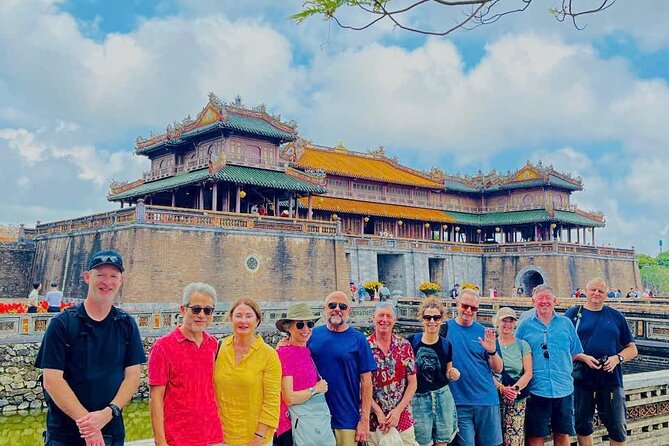
This is ideal if you:
- Want a structured route through the Imperial Citadel and Forbidden City
- Appreciate learning why gates and palaces had different roles
- Like small groups that don’t turn into a bottleneck crowd
It might be less ideal if you:
- Struggle with uneven steps or worn stone surfaces
- Prefer a mostly level walk and lots of sitting breaks
If you’re not sure, think about how you handle stairs at home and how long you can comfortably stand. This tour is manageable for many people, but it’s not built to be gentle on the feet.
Should You Book the Hue Imperial City Walking Tour?
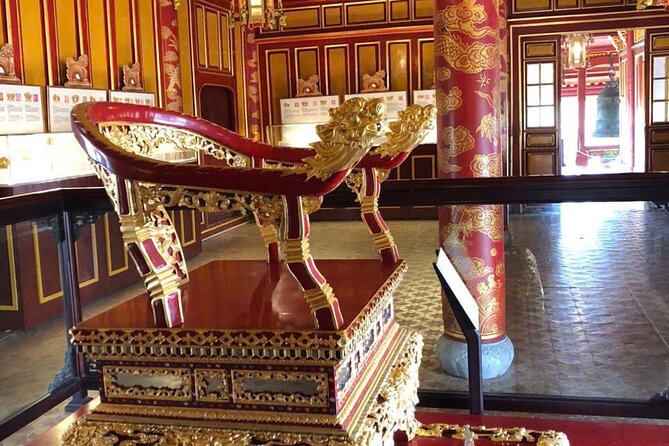
I’d book it if you want the best mix of structure, included admissions, and an expert guide in a time-boxed 2.5-hour experience. At $18, the value makes sense—especially because many stops include entry and you’re not paying at each point.
I’d hesitate only if step-heavy walking is a real issue for you, since uneven steps are part of the route. If that’s you, consider asking before booking about how the guide handles slower mobility moments, or choose a different style of visit.
Also, because the group max is 12, booking ahead is smart. If your dates are firm, aim to lock it in earlier rather than later.
FAQ
How long is the Hue Imperial City walking tour?
The tour runs about 2 hours 30 minutes.
How many people are on the tour?
The group size is limited to a maximum of 12 travelers.
What’s included in the price?
You get an English-speaking guide, and admission tickets are included for many stops on the route. A mobile ticket is provided.
What’s not included?
All fees and taxes are listed as not included, and private transportation to and from the meeting point isn’t included. Bottled water also isn’t included.
Where do I meet the guide?
You start at Cửa Ngăn (Ngan Gate) in the area near the cannons. The guide meets you at the four cannons located at Ngan Gate.
Where does the tour end?
The tour ends at Cửa Hiển Nhơn (listed near Đoàn Thị Điểm, Thuận Thành, Huế).
Can I get a full refund if my plans change?
Yes. Free cancellation is available up to 24 hours before the experience starts for a full refund.
The Old Capital on Foot
- Hue: Imperial City Walk, Motorbike Tour & Private Car Options
★ 5.0 · 732 reviews - Hue Imperial City Walking Tour: Citadel & Forbidden City
★ 5.0 · 280 reviews - Hue Imperial City Walking Tour (Kids Half-Price)
★ 5.0 · 133 reviews - 3-Hours Hue Imperial Walking Tour with Guide with Lunch/ Dinner
★ 5.0 · 125 reviews - Half-Day Guided Street Food Walking Tour at Hue
★ 5.0 · 116 reviews - Hue Imperial City Tip-Based Walking Tour (Group Tour)
★ 5.0 · 59 reviews
More Tour Reviews in Hue
- Hue to Hoi An ( Hoi An to Hue) Top Gear with Lefamily Riders Tours ( 1 way)
★ 5.0 · 3,156 reviews - Easy Rider private tour via Hai Van pass from Hue – Da Nang – Hoi An (1Way|Loop)
★ 5.0 · 1,542 reviews - Easy Rider From Hue Da Nang Hoi An Via Hai Van Pass With Mister T
★ 5.0 · 769 reviews - Hue to Dn/Hoi An: Hai Van Pass, beaches & Mt Monkey or vice versa
★ 5.0 · 743 reviews - Hue: Imperial City Walk, Motorbike Tour & Private Car Options
★ 5.0 · 732 reviews - Hue city Deluxe Group Tour (Daily Tour-12 pax max)
★ 5.0 · 569 reviews
Deeper Inside the Imperial Citadel
- Hue: Imperial City Walk, Motorbike Tour & Private Car Options
★ 5.0 · 732 reviews - Hue Imperial City Walking Tour: Citadel & Forbidden City
★ 5.0 · 280 reviews - Hue Imperial City Walking Tour (Kids Half-Price)
★ 5.0 · 133 reviews - 3-Hours Hue Imperial Walking Tour with Guide with Lunch/ Dinner
★ 5.0 · 125 reviews - Hue Imperial City Tip-Based Walking Tour (Group Tour)
★ 5.0 · 59 reviews - Hue Imperial City Walking Tour 2.5 Hours
★ 5.0 · 42 reviews
Latest Hue Tours We Have Written Up





Imperial City & Citadel Tours, compared.
 ★ 4.9Hue Customizable Tour with Imperial Citadel & Forbidden CityFrom $12937 reviews
 ★ 5.0Imperial City Walk, Motorbike Tour & Private Car OptionsFrom $7732 reviews
 ★ 5.0Exploring Royal City with Multi Options and Dragon BoatFrom $12675 reviews
 ★ 4.8Hue Imperial Ancient City Walking TourFrom $2308 reviews
 ★ 4.8From Da Nang/Hoian/Hue: Hue Imperial City Full-Day TourFrom $31295 reviews
 ★ 5.0Hue Imperial City Walking Tour: Citadel & Forbidden CityFrom $9280 reviews
★ 4.8Hue Imperial City Walking Tour: Citadel & Forbidden CityFrom $11245 reviews
★ 5.0Hue Imperial City Walking Tour: Citadel & Forbidden CityFrom $9280 reviews
★ 4.8Hue Imperial City Walking Tour: Citadel & Forbidden CityFrom $11245 reviews
 ★ 5.0Hue Imperial City Walking Tour (Kids Half-Price)From $29133 reviews
Browse the lists this tour appears in