Reviewed · HUE
Vietnam Buddhist Tours: Buddhism In Hue, Philosophy Of Life
Hue can feel spiritual fast.
This tour is a smart way to see Buddhism in Hue without guessing your way around. Two things I really like: you get private, question-friendly guiding instead of a rushed group lecture, and the day includes time at places tied to real practice, not just photos. One possible drawback to keep in mind: you’ll be on the move for most of an 8-hour day, so it’s best if you’re comfortable with early starts and temple etiquette.
What makes the itinerary work is the pacing. You start with views and calm on Vong Canh Hill, then shift into temple time at Tu Hieu Pagoda (with chanting) and Huyen Khong Son Thuong Pagoda (meditation or a dharma talk). If you’re hoping for a purely museum-style day, this isn’t it. It’s more about slowing down, listening, and learning how belief shows up in everyday space—pagodas, gardens, chanting, and quiet conversations with your guide.
In This Review
- Key highlights worth your attention
- Hue through Buddhism, not just tourism
- How the day is structured (and why the pacing matters)
- Vong Canh Hill: the calm intro to Hue and belief
- Tu Hieu Pagoda: pine forest peace and Thich Nhat Hanh context
- Huyen Khong Son Thuong Pagoda: Theravada practice in Hue
- Lunch and a short cooking class: eat like you’re part of the day
- Your private guide: the real value of asking questions
- Getting the most out of temple visits (without overthinking it)
- Price and value: what $124 really buys you
- Who should book this tour
- Should you book this tour?
- FAQ
- FAQ
- What is the duration of the Hue Buddhist tour?
- What sites does the tour include?
- Is lunch included, and is there any activity related to lunch?
- Do I need to pay for admission tickets at the stops?
- Is this tour private or shared?
- What happens if the weather is poor?
Key highlights worth your attention
- Vong Canh Hill morning views: clean air, Hue laid out below, and an easy intro to local belief
- Tu Hieu Pagoda + chanting: a pine-forest temple visit with a real rhythm to the practice
- Thich Nhat Hanh connection: you’ll hear how he’s linked to Tu Hieu and why that matters
- Theravada in Hue: Huyen Khong Son Thuong Pagoda is one of the rarer Theravada stops in the area
- Lunch plus short cooking class: you eat first, but you also learn a small technique in a garden house
Comparing a few options? These Hue trips earn steady marks from travellers.
- Hue to Hoi An ( Hoi An to Hue) Top Gear with Lefamily Riders Tours ( 1 way)★ 5.0 · 3,156 reviews
- Easy Rider private tour via Hai Van pass from Hue – Da Nang – Hoi An (1Way|Loop)★ 5.0 · 1,542 reviews
- Easy Rider From Hue Da Nang Hoi An Via Hai Van Pass With Mister T★ 5.0 · 769 reviews
- Hue to Dn/Hoi An: Hai Van Pass, beaches & Mt Monkey or vice versa★ 5.0 · 743 reviews
Hue through Buddhism, not just tourism
Hue has a reputation for imperial flavor—tombs, palaces, and history you can read on stone. But this tour nudges you to see another Hue: the spiritual Hue. The basic idea is simple. You visit major pagodas around town, then connect the dots with your private guide as you go.
You’ll also notice that the tour is built for understanding, not speed. You’re explicitly encouraged to ask questions about Buddhism and Vietnamese culture, and that changes the tone. Instead of being stuck with a pre-written script, you can ask why certain buildings look the way they do, why chanting sounds different in different places, or how practice fits into daily life.
At $124 per person for about 8 hours, the value comes from the blend. You get pickup, air-conditioned transport, admission tickets listed as free, and included lunch with a short cooking class. If you’d otherwise pay separately for a guide, entry fees, and a quality meal, this package starts to look pretty practical.
How the day is structured (and why the pacing matters)
The tour runs for about 8 hours with a morning start. Pickup is offered from your hotel, with the first stop beginning around 8:30 to 9:00, and the official start time noted as 8:00 am. After the first pagoda stop and a morning of walking and listening, you’ll move into lunch. The afternoon then shifts to Huyen Khong Son Thuong Pagoda, with meditation or a dharma talk built into the plan.
That pacing matters because temples aren’t the same kind of “sight” as streets and monuments. If you hit three pagodas back-to-back with no breathing room, you tend to rush. This itinerary avoids that by mixing view time (Vong Canh Hill), a forested pagoda visit (Tu Hieu), then a more structured quiet block later (Huyen Khong). The lunch with a small hands-on cooking session is also a smart reset.
One small thing to consider: the plan includes multiple walking moments and time outdoors. If you’re visiting in hot weather, plan for sun protection, and if it’s rainy, remember the experience notes that good weather is required.
Vong Canh Hill: the calm intro to Hue and belief
Your morning begins with a ride out to Vong Canh Hill. From here, Hue’s scenery opens up in front of you. It’s not complicated, but it’s a powerful way to start. You’re up a bit, looking out, breathing easier, and your guide uses that viewpoint to set the theme of the day: how Buddhism shows up in Hue.
The tour describes this as a serene, clean-air start, with a tea-and-quiet vibe. One past guest shared that the guide (Nam) created an early, secluded moment for tea and Bodi Dharma sharing. You might not get the exact same detail every time, but the spirit of this first stop is clear: it’s meant to slow you down before you head into temples.
Practical tip: wear something comfortable for the climb or uneven paths, and keep your phone charged—but don’t treat the hill like a photo sprint. The view is best when you actually look at the city below for a minute.
Tu Hieu Pagoda: pine forest peace and Thich Nhat Hanh context
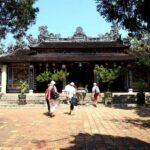
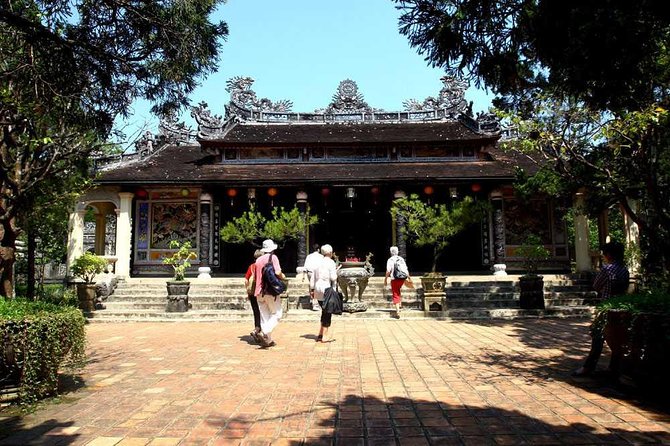
Next comes Tu Hieu Pagoda, tucked inside a pine forest and known for being close to 200 years old. The vibe here is quieter than you might expect from a place that attracts visitors. You’ll wander through the grounds while your guide shares the emotional and cultural story tied to the temple, including the theme of filial piety under the Nguyen dynasty.
Here’s the detail that makes this stop especially meaningful: you’ll hear about Thich Nhat Hanh, described as a wide-known Zen master connected to Tu Hieu. One review adds specifics—Thich Nhat Hanh began his monkhood there and later returned after exile in France to spend the remainder of his life there. That kind of context turns a temple visit into more than architecture.
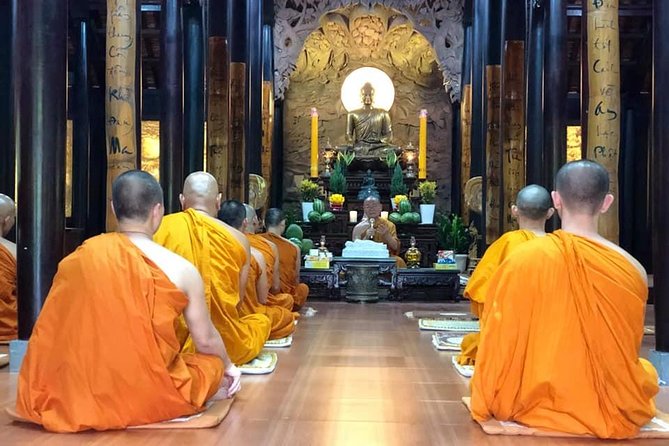
The itinerary also includes chanting at Tu Hieu. That matters because chanting isn’t just background noise; it’s a living part of practice. Being there—rather than reading about it afterward—helps you understand what people mean when they talk about devotion, routine, and community.
Possible drawback: chanting time can feel intense if you’re not used to religious ceremonies. If you’re sensitive to loud sound or prefer silence, tell your guide at the start. A private guide can often help you position yourself so you stay comfortable.
Huyen Khong Son Thuong Pagoda: Theravada practice in Hue
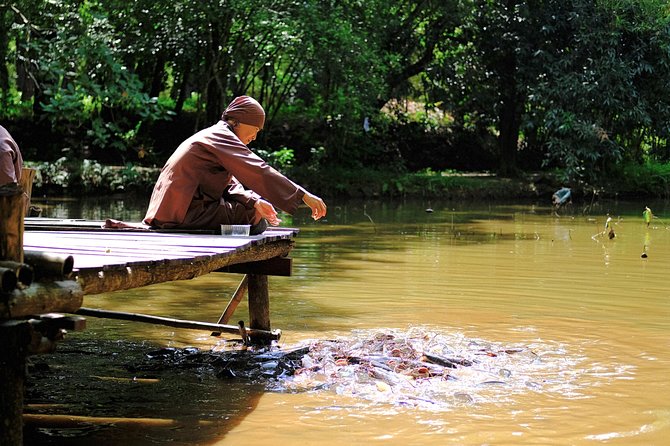
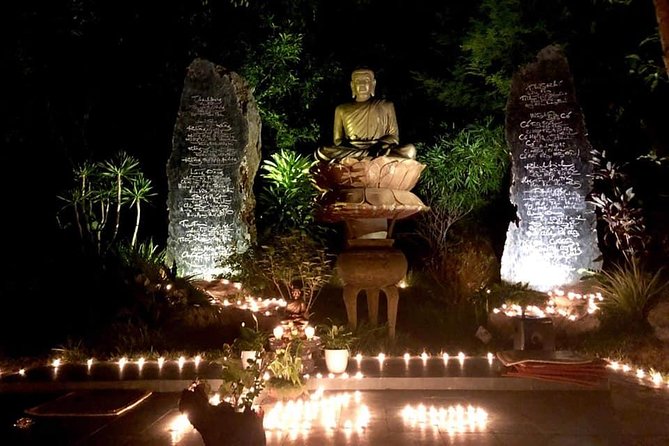
After lunch, you head to Huyen Khong Son Thuong Pagoda. This stop is a key reason the tour feels more “different Hue” than standard sightseeing: the temple is described as one of the rare Theravada Buddhism temples in Hue.
From a distance, you may even hear songs coming from the fir trees forest and brooks. That’s not a small detail. It sets expectations that this is a place where sound and nature feel connected to worship. When you arrive, the atmosphere is meant to be peaceful and spacious, with beautiful buildings and thoughtful construction.
Your time here isn’t only walking. The plan includes either a meditation session or a dharma talk (depending on what’s available). This is where the tour becomes genuinely educational. With a guide at your side, you can ask what you’re seeing and hearing, and how Theravada practice may differ in tone and emphasis from Mahayana spaces you might have visited earlier.
Consideration: if you’re expecting a strictly “guided lecture” style, you might find this part more experiential than verbal. That’s the point. Quiet time and guided explanation often work better together.
Lunch and a short cooking class: eat like you’re part of the day
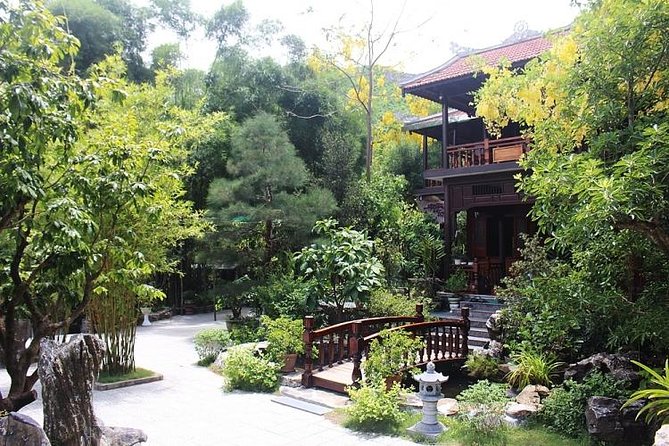
Lunch is included, and it begins with a small cooking class in a traditional garden house. Even if you’re not a cooking person, this is a smart inclusion for two reasons.
First, it gives you a normal human break in the middle of spiritual sites. Walking, listening, and staying respectful at temples can wear you down. Food resets your energy without pretending it’s optional.
Second, the cooking class acts like cultural translation. You learn small techniques in the same environment you’ll eat in, and that helps you understand the broader rhythm of daily life beyond pagoda gates.
What to do practically: arrive hungry, and pay attention to what your instructor tells you. Even a short class teaches you how to notice flavors and textures that you’d otherwise skip over in Vietnam.
If you’re planning your day thoughtfully, remember dinner isn’t included. You’ll likely be ready for an easy evening meal back in town.
Your private guide: the real value of asking questions
This is a private tour, meaning only your group participates. That’s important because Buddhism in Vietnam can be confusing if you only rely on signs and photos. Your guide can connect what you see to why it matters.
A big plus here is the guide’s role as translator. You’re encouraged to ask questions about Buddhism and Vietnamese culture throughout the day, not just at one stop. In practice, that means you can ask things like:
- why chanting is done in certain spaces and moments
- how stories attached to a temple influence how people understand it
- what Theravada practice feels like in the atmosphere of Huyen Khong
In one account, the guide Nam led an intimate style of tour that made Buddhism in Hue feel personal rather than abstract. You get the same advantage even if your day looks a little different: private guiding makes it easier to slow down and ask the questions you actually have.
Getting the most out of temple visits (without overthinking it)
Because you’re visiting active religious sites, it helps to approach with simple respect. You don’t need to act like a scholar. Just follow the obvious cues:
- dress modestly (think shoulders and knees covered)
- keep your voice low where others are chanting or meditating
- ask your guide when you’re unsure about where to stand or how to participate
Also, plan your comfort. Temples often mean uneven ground and long pauses. Bring a light layer for air-conditioning in the van and for cooler indoor spaces if you feel it.
Finally, lean into the quiet moments. The itinerary includes meditation or a dharma talk, plus chanting at Tu Hieu. If you treat those as checkboxes, you’ll miss what makes this tour stand out in a good way.
Price and value: what $124 really buys you
At $124 per person for about 8 hours, you’re paying for a bundle of small conveniences that add up:
- hotel pickup and transportation in an air-conditioned vehicle
- lunch plus a short cooking class in a garden house setting
- admission tickets listed as free for the included stops
- bottled water
- private guiding so you can ask questions instead of passively watching
You’re also paying for an organized day with built-in pacing: hill views, Tu Hieu chanting time, lunch with hands-on learning, then Huyen Khong’s quieter Theravada-focused practice.
If you’re traveling solo and want depth, private guiding can cost more in many cities. Here, the package makes it feel more reasonable. If you already planned to hire a guide for Hue pagodas and meals, this price can look like a clean way to “bundle” the day.
Who should book this tour
Book it if you want:
- a Buddhist-focused Hue day, not just sightseeing
- private time to ask questions about Buddhism and Vietnamese culture
- real practice moments, like chanting and meditation/dharma talk
It’s also a good fit if you like calm mornings and don’t mind a full day. If you prefer only secular sights, or you dislike religious ceremonies, you might find the chanting and meditation parts less comfortable. In that case, tell the tour operator your preferences in advance.
One more note: the experience requires good weather. If rain or mist is likely, it can affect the day, and you may be offered another date or a full refund.
Should you book this tour?
I’d recommend it if you’re curious about how Buddhism shows up in everyday spaces in Hue—through stories, practice, and the feel of the grounds. The combination of Vong Canh Hill, Tu Hieu (with chanting and Thich Nhat Hanh context), and Huyen Khong (Theravada and quiet practice) gives you variety without turning the day into chaos.
Don’t book it if you want a purely casual stroll with no temple etiquette or if you’re not up for ceremonies. But if you like thoughtful guiding and you’re open to meditation or chanting as part of understanding, this is a strong value day.
FAQ
FAQ
What is the duration of the Hue Buddhist tour?
The tour lasts about 8 hours.
What sites does the tour include?
You’ll visit Vong Canh Hill, Tu Hieu Pagoda, and Huyen Khong Son Thuong Pagoda.
Is lunch included, and is there any activity related to lunch?
Yes. Lunch is included, and it starts with a short cooking class in a traditional garden house.
Do I need to pay for admission tickets at the stops?
Admission tickets are listed as free for the included stops.
Is this tour private or shared?
This is a private tour/activity. Only your group will participate.
What happens if the weather is poor?
The experience requires good weather. If it’s canceled due to poor weather, you’ll be offered a different date or a full refund.
More Tour Reviews in Hue
- Hue to Hoi An ( Hoi An to Hue) Top Gear with Lefamily Riders Tours ( 1 way)
★ 5.0 · 3,156 reviews - Easy Rider private tour via Hai Van pass from Hue – Da Nang – Hoi An (1Way|Loop)
★ 5.0 · 1,542 reviews - Easy Rider From Hue Da Nang Hoi An Via Hai Van Pass With Mister T
★ 5.0 · 769 reviews - Hue to Dn/Hoi An: Hai Van Pass, beaches & Mt Monkey or vice versa
★ 5.0 · 743 reviews - Hue: Imperial City Walk, Motorbike Tour & Private Car Options
★ 5.0 · 732 reviews - Hue city Deluxe Group Tour (Daily Tour-12 pax max)
★ 5.0 · 569 reviews