
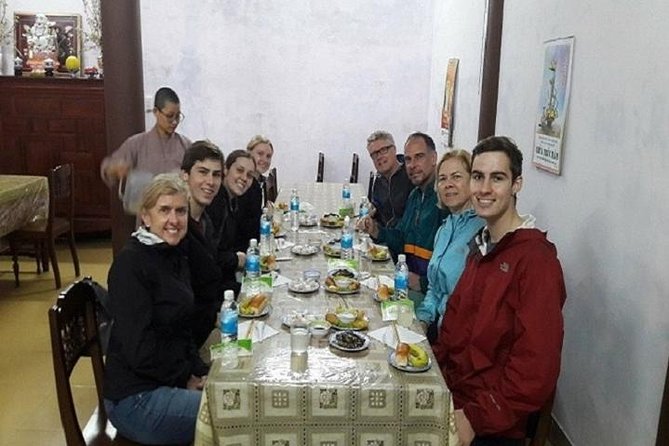
Reviewed · COUNTRYSIDE CYCLING & THUY BIEU VILLAGE
Hue Motorbike & Boat Tour to Countryside & Heritage Sites
Motorbike riding in Hue is a cheat code, because you cover a lot of ground without losing the small-moment sights. This tour strings together Hue countryside stops and key heritage sites with an English-speaking driver-guide, plus a slow Perfume River boat ride to cool down afterward. You’ll move from ornate royal grounds to everyday village life in just one day.
I like the way this plan keeps things easy: hotel pickup gets you started, and your driver handles the traffic so you can just enjoy the ride. I also like the balance of headline stops and human-scale places like Thuy Xuan incense-making village, where you get a quick look at craft life beyond the big tombs.
One thing to consider: you’ll be on a motorbike for extended stretches, and even if the drivers are careful, Hue traffic can feel intense at first. If you have limited comfort with riding (or a low tolerance for sudden stops), this may take some mental prep—bring a sarong for temples too.
In This Review
- Key things to know before you go
- What This Hue Motorbike-and-Boat Day Is Like
- Price and What You Actually Pay For (Tickets vs Included Fees)
- Your Route Through Hue: From Imperial City to Minh Mang
- Tomb Highlights: Tu Duc and Khai Dinh Without the Rush
- Countryside Stops You’ll Remember: Incense Village, Vong Canh, Tiger Arena
- Temple Time: Thien Mu Pagoda vs Tu Hieu Pagoda
- Thuy Tien Lake, Perfume River Cruise, and the Right Kind of Break
- Riding Practicalities: How to Stay Comfortable on a Motorbike Tour
- Who This Hue Tour Fits Best
- Should You Book This Hue Motorbike and Boat Tour?
- FAQ
- How long is the Hue Motorbike & Boat tour?
- What’s included in the tour price?
- Are entrance tickets to the tombs included?
- Can I choose between Tu Hieu Pagoda and Thien Mu Pagoda?
- Do I get hotel pickup?
- What should I wear for temple visits?
Key things to know before you go
- Hotel pickup + small-group feel: you’re not bouncing around with a huge crowd.
- English-speaking driver-guide: you get context as you ride, not just photo stops.
- Mix of big tombs and quieter countryside stops: the route avoids feeling like only monuments.
- Thanh Toan Covered Bridge and the Perfume River cruise: two classic Hue visuals included in the flow.
- Optional switch: Tu Hieu Pagoda vs Thien Mu Pagoda: confirm your preference before departure.
- Smart casual dress + sarong: temple visits are easier when you arrive prepared.
Out to Thuy Bieu and the garden lanes
- Hue Half-Day Motorbike Tour – Authentic Countryside of Vietnam, History, Culture★ 5.0 · 143 reviews
- Hue Bike Tour with Optional Fishing Activities in Local Village★ 5.0 · 36 reviews
- Hue Motorbike & Boat Tour to Countryside & Heritage Sites★ 5.0 · 35 reviews
- Hue Morning Countryside Motorbike Tour★ 5.0 · 32 reviews
What This Hue Motorbike-and-Boat Day Is Like
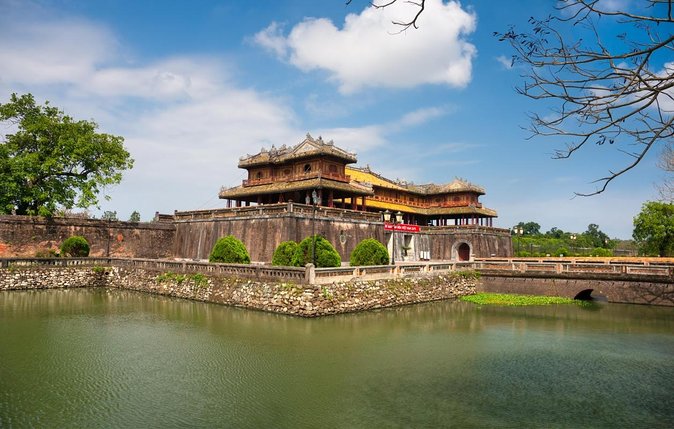
This is the kind of Hue tour that makes sense if you want variety, not a checklist that drags on. You ride behind your driver-guide, stopping at major royal sites and countryside points spread around the city. The pacing is built for short, focused visits: you don’t have to commit a full day to just one palace or one tomb complex.
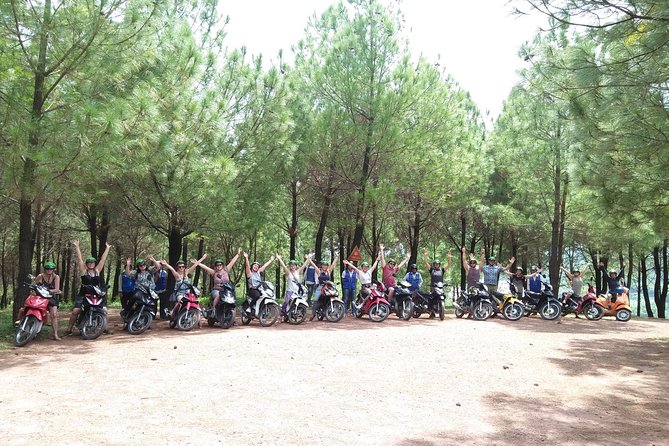
A key value here is practicality. Instead of you trying to plan transport between far-flung spots, you get a route that strings them together—Imperial City first, then royal mausoleums, then a patchwork of countryside and craft stops. Even the “break” moments are planned, like quick stops at bridges and hill viewpoints, and a Perfume River boat cruise that takes you back toward the center.
And yes, safety matters on motorbikes. The experience is run with trained drivers, and many people start nervous and relax quickly once they realize the rhythm is controlled. If you’re the type who worries about getting swept into chaos, you’ll likely appreciate that the operation is organized rather than improv.
Price and What You Actually Pay For (Tickets vs Included Fees)
The headline price is $20 per person, which is why this tour is so popular. For that money, you’re getting transportation in the form of motorbike logistics, hotel pickup, an English-speaking driver-guide, and several included entrance items.
Where it gets important is the ticket split. Tombs and some major sites are not included, and you’ll pay on site (the tour mentions 150k VND per tomb, or a combo ticket if you also visit the Imperial City/Citadel). At the same time, several stops do include entrance fees in the tour price—so you’re not paying for everything twice.
Included entrance fees (as listed) are for stops such as:
- Thanh Toan Covered Bridge
- Thuy Tien Lake
- Thuy Xuan incense-making village
- Tu Hieu Pagoda (or the alternative pagoda option)
- Vong Canh Hill
- Tiger Arena
- Thien Mu Pagoda (listed as free)
Plus the Perfume River cruise is free (no admission payment required).
So the best way to think about value: you’re paying for a “transport + guiding + partial admissions” package. If you’re okay paying a bit extra for the tomb tickets you didn’t get included, this price is a strong deal for the number of places you can hit in one stretch.
Your Route Through Hue: From Imperial City to Minh Mang
The morning starts with the Hue Imperial City (The Citadel), a big site with a lot to take in. You’ll have around 2 hours here. This is your orientation point for the Nguyen Dynasty story—where emperors lived and worked until the mid-20th century. It’s also where you’ll see how the grounds are laid out, so later tombs make more visual sense.
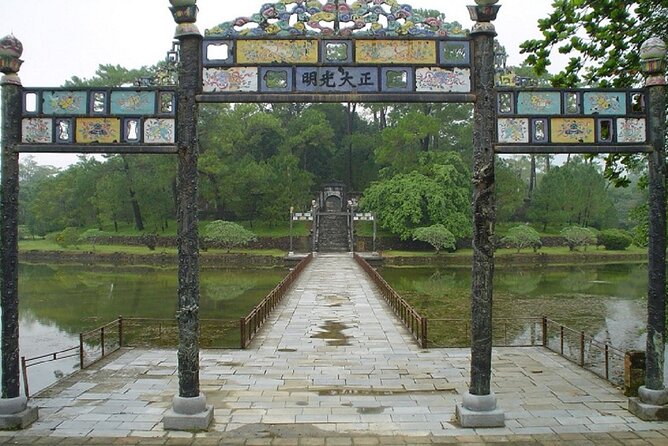
Next is the Mausoleum of Emperor Minh Mang, typically 40 minutes. This tomb is known for its landscape-style architecture and ordered design. Even if you only spend a short time, it helps to focus on the layout first, because these royal sites are more about planning than quick photo moments.
Then you head to Thanh Toan Bridge, just 15 minutes, but it’s worth treating like a mini stop. This covered bridge (one of only a few of its kind in Vietnam) is built with a tiled roof over a wooden arch. It’s the kind of structure where you can see how function and style work together—shade, protection, and a calm rhythm over the water.
Practical note: stops here are short by design. If you like lingering for 45–60 minutes in museums, you might wish you had more time at Imperial City. If you like variety, the shorter structure will feel efficient.
On the back of a bike, more Hue roads
Tomb Highlights: Tu Duc and Khai Dinh Without the Rush
Two of the biggest emotional draws of Hue are Tu Duc and Khai Dinh, and this route gives you both.
Tu Duc’s Tomb takes about 45 minutes. It began well before Emperor Tu Duc died, with major construction from the 1860s, then later temple-palace style buildings added afterward. The result is a tomb complex that feels like more than a burial site—it was built for living and daily imperial use, so it tends to read differently than smaller mausoleums.
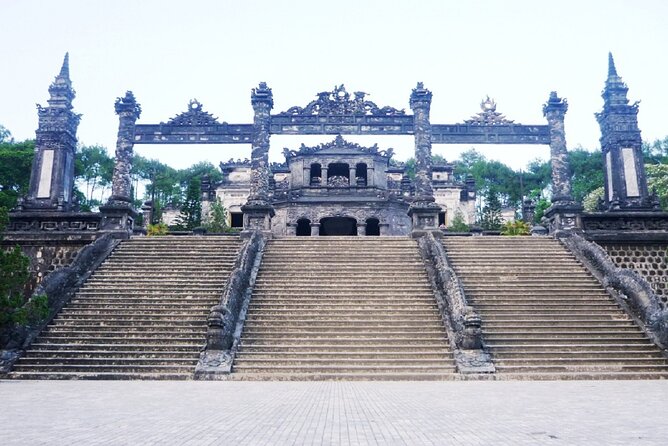
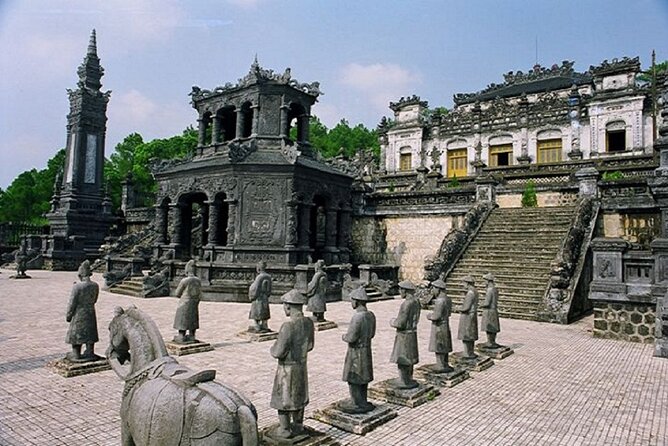
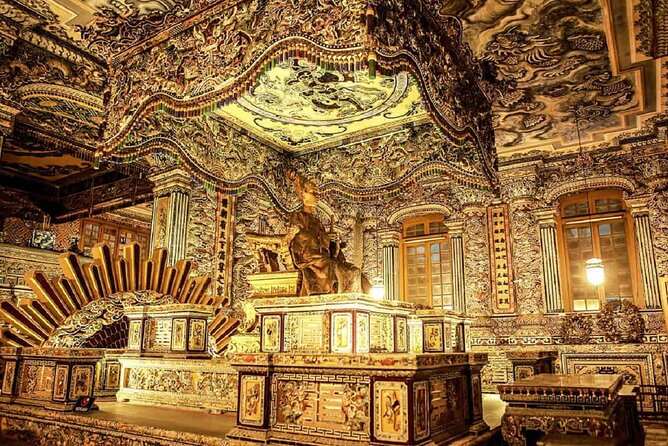
Then comes Khai Dinh’s Tomb, about 30 minutes. It took over a decade to complete, starting in 1920, and you can feel the effort in the craftsmanship approach. It’s a great stop if you want something that feels visually “different” from other tombs because the structure leans into detailed work and a more monumental presence.
The small drawback: tomb entrances are not included in the base price, so you’ll want a little cash ready and a simple plan for ticketing. If you’re traveling on a tight budget, this is the moment where costs can rise.
Countryside Stops You’ll Remember: Incense Village, Vong Canh, Tiger Arena
After the major royal stops, the tour turns more everyday. This is where you start to feel like you’re riding through Hue, not just around it.
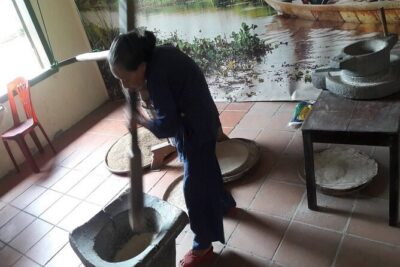
Thuy Xuan Incense-making village is scheduled for about 15 minutes. It’s described as a craft tradition dating back roughly 700 years, tied to incense supply for the Nguyen royal court and also local communities in the area. Don’t expect a full workshop day. Instead, think of it as a quick, visual introduction: you get a sense of how long a craft can survive when it has both cultural and practical demand.
Then you’ll visit Vong Canh Hill for about 15 minutes. Historically, it was a place where Nguyen kings rested and viewed the area, and it’s surrounded by tomb systems. Even if you keep it quick, a hill stop is a good reset. It helps you understand Hue from a wider angle rather than only from courtyards and gates.
Tiger Arena is another short but unique stop at about 15 minutes, described as a relic where tigers (or a tiger breeding setup) were kept and where there was an arena element unique to this site. It’s one of those places that adds a “Hue was never only polite palaces” contrast to the day.
If your favorite travel moments are the odd ones—the structures you don’t see anywhere else—this part of the route is a win.
Temple Time: Thien Mu Pagoda vs Tu Hieu Pagoda
Temple visits are built into the day, and you have a choice.
The tour notes you can select Thien Mu Pagoda instead of Tu Hieu Pagoda, and you should confirm the swap before departure. In practice, that means you might spend around 30 minutes at the chosen pagoda.
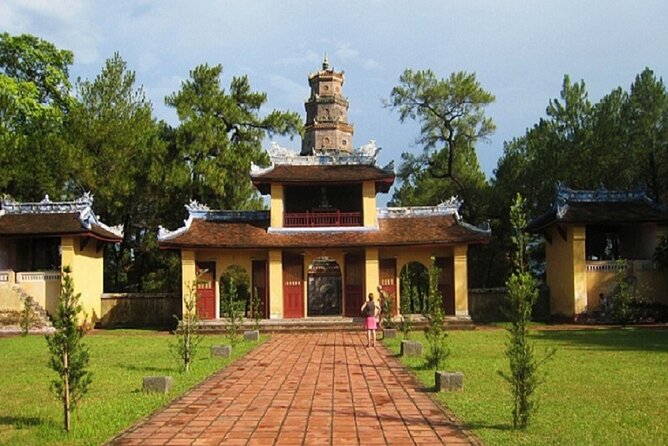
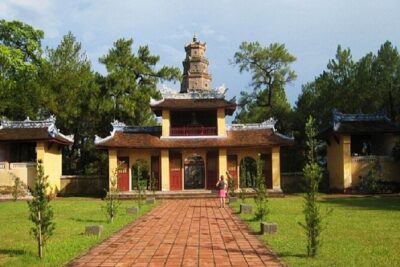
Thien Mu Pagoda is listed as free for entrance, and it’s described as the most well-known pagoda in Hue. It’s also recognized for its antique features and strong visual identity along the river side. This is usually the stop that anchors the “Hue postcard” feeling.
Tu Hieu Pagoda is also scheduled at about 30 minutes, and it’s described as connected to places for eunuchs in the Nguyen Dynasty and as a living/after-life space. In other words, it reads more “court-internal” than tourist-only.
Either option works if you come prepared. You’ll want to dress smart casual and have a sarong to cover knees and shoulders, since temple etiquette isn’t optional here. If you arrive without coverage, you may lose time sorting it out.
Thuy Tien Lake, Perfume River Cruise, and the Right Kind of Break
Two “breather” elements keep the day from feeling like constant stone and stairs.
First is Thuy Tien Lake, about 30 minutes, listed as having been built around 2000 and featuring past attractions such as an aquarium and a large stand area. The tour information also includes a note that the project changed direction due to later developments. The takeaway for you: approach this stop as a calm ride-and-photo break, not a guarantee of a full entertainment complex on the day you visit.
Then you finish with a Perfume River boat ride of about 30 minutes. It’s described as a cruise passing the Citadel, with no stop for visiting, and then returning toward the city center where the guide and driver bring you back to your hotel.
This final piece is smart because it’s restorative. After walking tombs and temples, you get a slower pace and a changing view, and you get transported back without needing to line up another ride.
Riding Practicalities: How to Stay Comfortable on a Motorbike Tour
This is a motorbike tour with hotel pickup and guided stops, so comfort is about preparation.
- Wear smart casual and bring a sarong to cover knees and shoulders for temple sites.
- Consider bringing a light layer. You’ll be moving and stopping, and weather can shift quickly.
- Bring water. Food isn’t included, and the tour doesn’t promise drinks along the way.
- If you’re traveling with kids, this can be a fun way to see Hue quickly. The key is that the drivers are experienced and calm—your job is to stay relaxed and follow instructions.
Also, plan your photo style. You’ll want a mix: some close-up detail shots at tombs, and then quick “big view” frames at hill and river moments. Short stops reward fast decisions. If you wait for perfect light every time, the schedule won’t cooperate.
Who This Hue Tour Fits Best
This tour is a great match if you want to see a lot of Hue without spending your day coordinating transport. It’s also a good option when you prefer guided context—having an English-speaking driver-guide explain what you’re looking at makes each site feel less random.
It’s especially suitable for:
- First-timers who want Imperial City + key tombs + river scenery in one go
- People who like short, efficient visits rather than long museum-style wandering
- Families who want kids to enjoy the ride (motorbike touring tends to be memorable when the drivers are careful)
It may be less ideal if:
- You strongly dislike motorbikes, even with an experienced driver
- You need long time at each site rather than quick stop-and-go segments
- You’re very sensitive to traffic stress
The tour is private in the sense that only your group participates. That’s a comfort factor if you prefer not to share your day with a bigger tour machine.
Should You Book This Hue Motorbike and Boat Tour?
I’d book it if your goal is a value-packed Hue heritage day that mixes royal sites, countryside craft life, and a river reset. The price works best when you’re comfortable paying any tomb entrances that aren’t included, and when you’re okay spending time on a motorbike.
Skip it (or choose another style) if motorbike travel would make you miserable from start to finish. In that case, the best scenes won’t matter because the stress will steal the fun.
If you do book, set your expectations right: this is a route that prioritizes variety and efficiency. Come prepared with proper temple clothing coverage, keep a small amount of cash ready for tomb tickets, and you’ll likely end the day feeling like you actually learned how Hue fits together.
FAQ
How long is the Hue Motorbike & Boat tour?
The tour runs approximately 4 to 8 hours, depending on timing and how long you spend at each stop.
What’s included in the tour price?
Hotel pickup is included, along with an English-speaking driver-guide, motorbike transportation, and some entrance fees. A Perfume River cruise (about 30 minutes) is listed as included/free.
Are entrance tickets to the tombs included?
Not always. The tour notes that tickets are not included and mentions 150k VND per tomb, or a combo ticket if you also visit the Citadel. Some specific stops do list entrance fees as included.
Can I choose between Tu Hieu Pagoda and Thien Mu Pagoda?
Yes. The tour says you can choose Thien Mu Pagoda instead of Tu Hieu Pagoda, but you should confirm the preference before departure.
Do I get hotel pickup?
Yes. Hotel pickup is offered, and you’ll also be driven back to your hotel after the tour.
What should I wear for temple visits?
The dress code is smart casual. You should bring a sarong to cover your knees and shoulders for temple visits.
More Tour Reviews in Hue
- Hue to Hoi An ( Hoi An to Hue) Top Gear with Lefamily Riders Tours ( 1 way)
★ 5.0 · 3,156 reviews - Easy Rider private tour via Hai Van pass from Hue – Da Nang – Hoi An (1Way|Loop)
★ 5.0 · 1,542 reviews - Easy Rider From Hue Da Nang Hoi An Via Hai Van Pass With Mister T
★ 5.0 · 769 reviews - Hue to Dn/Hoi An: Hai Van Pass, beaches & Mt Monkey or vice versa
★ 5.0 · 743 reviews - Hue: Imperial City Walk, Motorbike Tour & Private Car Options
★ 5.0 · 732 reviews - Hue city Deluxe Group Tour (Daily Tour-12 pax max)
★ 5.0 · 569 reviews
Hue From the Back of a Bike
- Easy Rider private tour via Hai Van pass from Hue – Da Nang – Hoi An (1Way|Loop)
★ 5.0 · 1,542 reviews - Easy Rider From Hue Da Nang Hoi An Via Hai Van Pass With Mister T
★ 5.0 · 769 reviews - Hue: Imperial City Walk, Motorbike Tour & Private Car Options
★ 5.0 · 732 reviews - Rental of a Scooter from Hue to Hoi An with Bag Transfer
★ 5.0 · 330 reviews - Motorbike Experience Hue to Hoi An Over Via Hai Van pass with Amazing Easy Rider
★ 5.0 · 274 reviews - HAI VAN PASS MOTORBIKE TOUR – Top Gear Experience
★ 5.0 · 231 reviews
Thuy Bieu and the Garden Villages
- Hue Half-Day Motorbike Tour – Authentic Countryside of Vietnam, History, Culture
★ 5.0 · 143 reviews - Hue Bike Tour with Optional Fishing Activities in Local Village
★ 5.0 · 36 reviews - Hue Morning Countryside Motorbike Tour
★ 5.0 · 32 reviews - Hue Tombs Tour by Bike & Dragon Boat Cruise on Perfume River
★ 5.0 · 21 reviews - Private Cycling Tour in Rural Hue with Farming Experience
★ 5.0 · 18 reviews - Hue Countryside Tour By Scooter
★ 5.0 · 12 reviews
Latest Hue Tours We Have Written Up



Countryside Cycling & Thuy Bieu Village, compared.
 ★ 5.0Hue Half-Day Motorbike Tour – Authentic Countryside of Vietnam, History, CultureFrom $36143 reviews
 ★ 5.0Hue Bike Tour with Optional Fishing Activities in Local VillageFrom $6936 reviews
 ★ 5.0Hue Morning Countryside Motorbike TourFrom $4532 reviews
 ★ 5.0Hue Tombs Tour by Bike & Dragon Boat Cruise on Perfume RiverFrom $5921 reviews
 ★ 5.0Private Cycling Tour in Rural Hue with Farming ExperienceFrom $8918 reviews
 ★ 5.0Hue Countryside Tour By ScooterFrom $5512 reviews
 ★ 5.0Hue Imperial City and Countryside Tour with Mr T Easy RiderFrom $5810 reviews
 ★ 4.9Half-Day Yellow Tam Giang Lagoon Sunset TourFrom $507 reviews
Browse the lists this tour appears in