
Reviewed · ROYAL TOMBS TOURS
Hue City Private Tour: Ancient Tombs and Incense Making Village
Hue has a way of sneaking up on you. This private day tour strings together the biggest Hue sights with a smart pace and fewer logistics headaches. You’ll see royal tomb architecture, glide on a boat to the oldest pagoda, then finish in Thuy Xuan’s incense workshops. One trip, many moods of Hue, with entrance fees wrapped in.
What I like most is the balance: heavy historical stops (Minh Mang, Khai Dinh, and the Imperial Citadel) plus softer breaks like the Dong Ba Market stroll and the incense village. Second, you’re not spending your morning figuring out rides, tickets, or where to start—pickup and drop-off are built in from central Hue.
One drawback to consider: you’ll walk and climb at tombs and imperial sites, so plan for a fairly active day. If you’re nursing knee trouble, bring supportive shoes and pace yourself.
In This Review
- Key things that make this tour work
- A 8–9 hour Hue route with less hassle than you expect
- Thanh Toan Bridge: the quick stop that adds a rare kind of beauty
- Tomb of Minh Mang: royal design that fits the terrain
- Tomb of Khai Dinh: where East and West meet in one statement
- Hue Imperial Citadel and the Nguyen Dynasty story
- Lunch at a local Hue spot: fuel that actually tastes like Hue
- Thien Mu Pagoda by dragon boat: the Perfume River view
- Dong Ba Market: a practical break with real texture
- Thuy Xuan incense-making village: smell the craft, not just read about it
- Price and value: what $59 includes (and what to watch)
- What to expect day-of: timing, walking, and comfort
- Who this tour suits best
- Should you book this Hue City tour?
- FAQ
- How long is the Hue City Private Tour?
- What does the $59 price include?
- Are entrance fees included?
- Is lunch included, and what kind of food is it?
- Do you visit Thien Mu Pagoda, and how do you get there?
- Does the tour include Thanh Toan Bridge?
- Is pickup available in Hue?
- How many people are in a group?
- What happens if the weather is bad?
Key things that make this tour work
- Small-group feel (up to 12 people) for a more personal flow through major sites
- Entrance fees are included, so you don’t get stuck on ticket lines or last-minute costs
- Thanh Toan Bridge stop gives you a rare wooden arched bridge moment without extra planning
- Dragon boat to Thien Mu Pagoda adds a different angle on the Perfume River area
- Thuy Xuan incense-making village lets you see a craft that’s still producing scents the old way
Further out to the Nguyen kings and their tombs
- Explore 3 Royal Tombs with Informative English-Speaking Driver★ 5.0 · 76 reviews
- Private Hue Tombs & Pagoda Tour with Local Guide★ 5.0 · 64 reviews
- Hue Royal Tombs Tour: Visit Best Pagoda & King’s Mausoleums★ 5.0 · 36 reviews
- Hue: Royal Tombs Tour – Visit 3 Best Tombs & Pagoda★ 5.0 · 21 reviews
A 8–9 hour Hue route with less hassle than you expect
This is designed as a full-day “greatest hits” loop: you start around 7:45–8:00 a.m. with pickup from your hotel in central Hue, then you’re on the move through tombs, citadel sites, and riverside culture. The whole thing runs about 8 to 9 hours, and it’s paced with breaks long enough to rest your legs before the next cluster of walking.
The tour is private in the sense that you’re assigned your group experience, and the maximum size stays small (12). That matters at Hue’s popular spots—small groups move with less crowd friction, and your guide can keep the day feeling like a story instead of a checklist.
I also like that lunch is included at a local place, and bottled water is on hand. In a long heat-and-humidity day, you’ll appreciate anything that keeps the schedule from turning into a hunt for drinks.
Thanh Toan Bridge: the quick stop that adds a rare kind of beauty
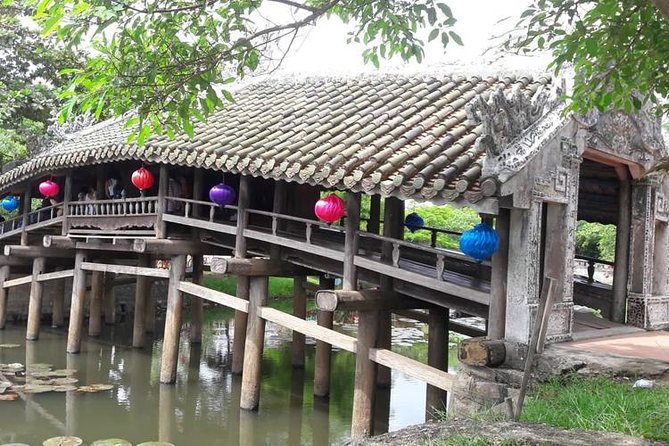
Hue isn’t only about palaces and tombs. It’s also about water, small roads, and bridges that do practical work with artistic flair. This tour includes a stop at Thanh Toan Bridge, famous for being a rare wooden arched bridge.
Even if your main interest is history, this stop changes the tone for a bit. It’s a classic Hue moment: working architecture, river context, and photo opportunities that don’t require a full second visit later. It’s also a good “reset” between bigger sites.
If you dislike brief stops, you may want to linger at the bridge a little longer than the rest of the day allows—but in general, this kind of stop is worth it for variety.
Tomb of Minh Mang: royal design that fits the terrain
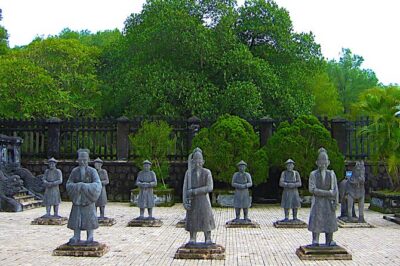
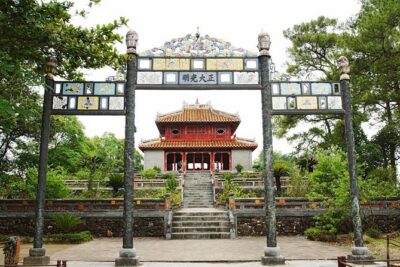
You’ll begin the tomb portion with Minh Mang Tomb, often described as the most majestic of Hue’s royal tombs. The big reason it gets attention is the way the architecture and landscaping work together. Instead of sitting like a monument in the middle of nowhere, it feels arranged around the environment.
The visit is about 40 minutes with admission included. Forty minutes sounds short, but at Minh Mang you’re not just passing through. You’re trying to notice patterns: pathways, sight lines, and how the tomb complex reads like a designed landscape rather than one single building.
One practical tip: tomb complexes can mean uneven paths and steps. Wear shoes you’d happily wear on a long city walk, not slick sandals. Your legs will do the talking here.
The tower at Thien Mu, and other pagodas


Tomb of Khai Dinh: where East and West meet in one statement
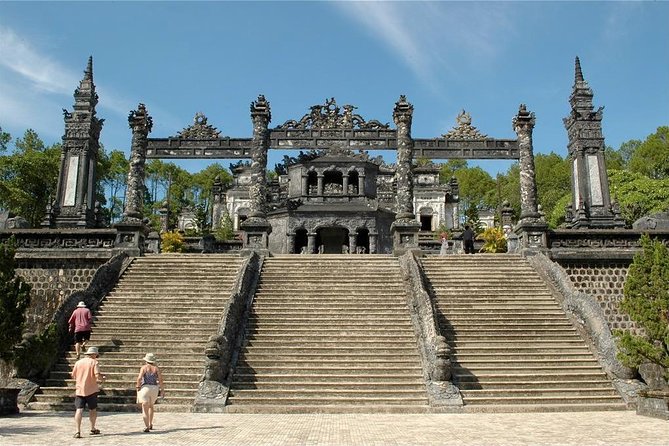
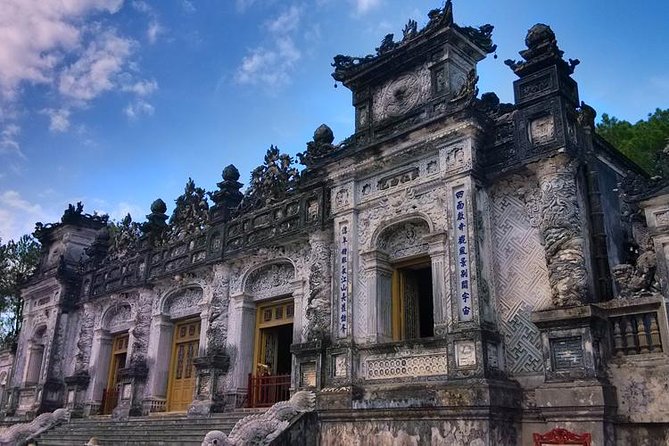
Next comes Khai Dinh Tomb, with about 45 minutes on site. This tomb is known for its blend of Western and Eastern architectural influences, which is a big part of why it feels different from Minh Mang.
If you like comparing styles, Khai Dinh gives you that “wait, what?” moment in the best way. The mix of influences makes the complex feel more theatrical, like it’s trying to communicate power through design choices that don’t all come from one tradition.
Timing is important at Khai Dinh. You’ll want to keep your pace steady so you can see the main features without feeling rushed. And if the morning sun is strong, you might want to pause in shaded areas when your guide explains the symbolism and layout.
Hue Imperial Citadel and the Nguyen Dynasty story
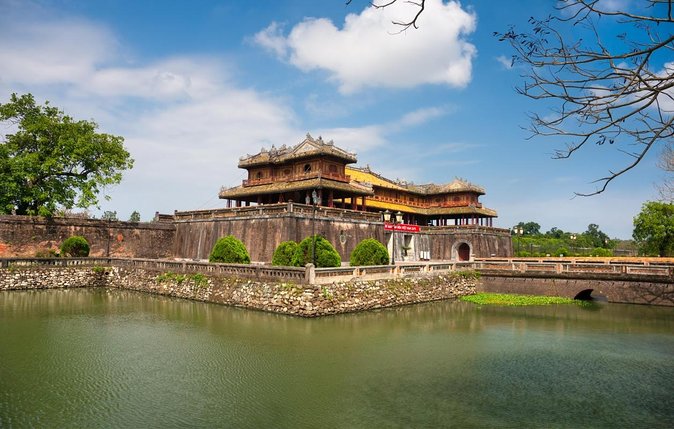
By late morning, you’ll head to lunch, then you’ll tour Hue Imperial Citadel (the imperial city). This is one of the central anchors of the day and the place where you’ll understand how Hue functioned as a royal center under the Nguyen Dynasty.
The citadel stop runs about 1 hour, with admission included. In that hour, the goal isn’t to memorize every detail. It’s to connect what you saw at the tombs—royal planning, formal layout, meaning in placement—to the political and ceremonial heart of the dynasty.
This section of the tour also tends to be where people slow down mentally. You start seeing patterns: axis-like layouts, layered spaces, and the way power was staged through architecture.
Also, bring your “feet-friendly” mindset. You’ll likely do more walking here than you expect from the time estimate. If you’re sensitive to steps, take breaks when they appear. Don’t try to “push through” out of stubbornness; Hue has enough stairs that you’ll pay later.
Lunch at a local Hue spot: fuel that actually tastes like Hue
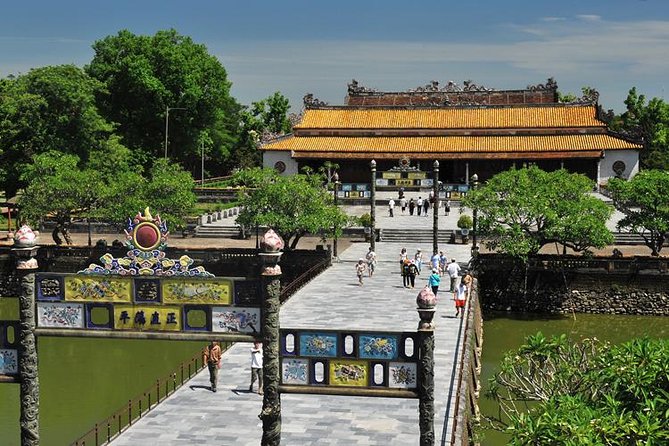
Lunch is included at a local restaurant serving Hue traditional food. In one example I saw from a recent group experience, the meal took place at a Hue place called Madam Thu, and the food was a highlight.
This matters because Hue food isn’t just food. It’s part of how the city expresses itself. The flavors tend to be distinct, and a stop at a local restaurant means you’re not eating a generic set menu designed to satisfy everyone who’s never been to Vietnam before.
What to do: pace your meal. If you eat too fast, you’ll feel it later when you’re heading into the afternoon stops. If you eat slowly, you’ll have enough energy for the Thien Mu pagoda boat ride and market time.
Thien Mu Pagoda by dragon boat: the Perfume River view
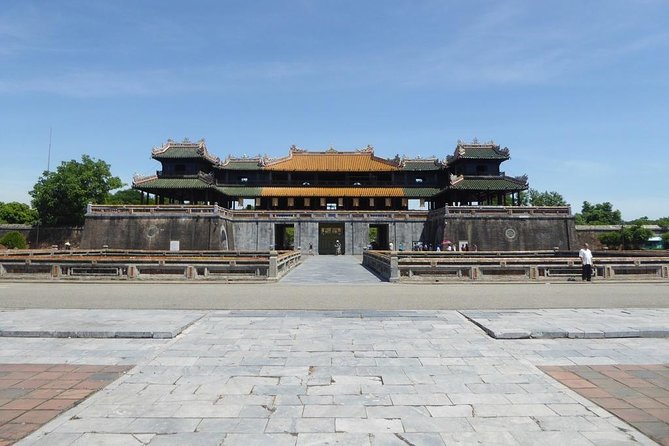
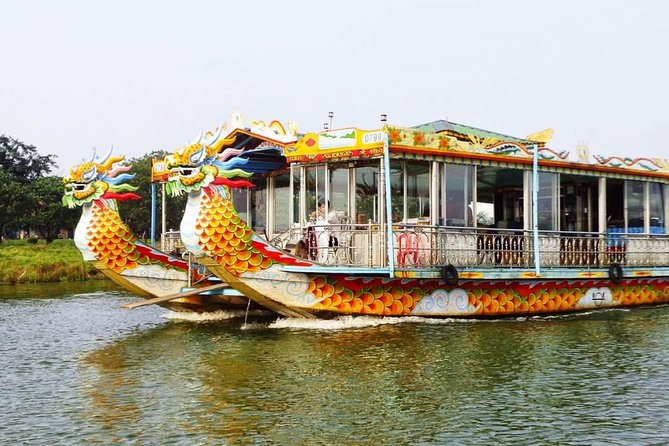
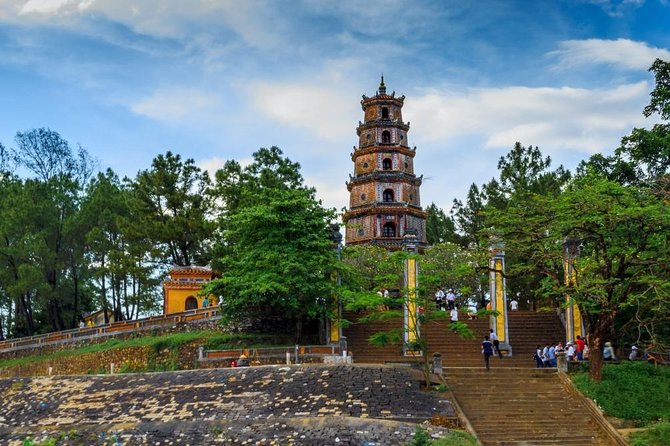
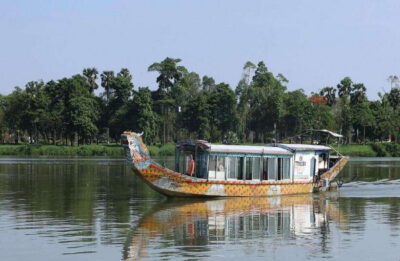
In the early afternoon, you’ll go to Thien Mu Pagoda, also called the Heaven Fairy Lady Pagoda. It’s noted as the oldest pagoda in Hue, and you’ll arrive via dragon boat (with admission included). This is one of the day’s best “why this tour exists” moments.
The boat ride also ties the pagoda to the setting—Hue’s river life. Even if you’re focused on temples, the river perspective changes your sense of place. You’re not only looking at architecture; you’re seeing how the city sits on water.
Here’s the practical consideration: the dragon boat ride is part of the experience, but it may not feel like a luxury boat tour. Plan to treat it as a functional, local-style ride—simple, scenic, and short enough that you won’t get bored.
Once at the pagoda, you’ll have about 1 hour total at this stop including the visit time. It gives you a real chance to see why Thien Mu carries so much cultural weight.
Dong Ba Market: a practical break with real texture
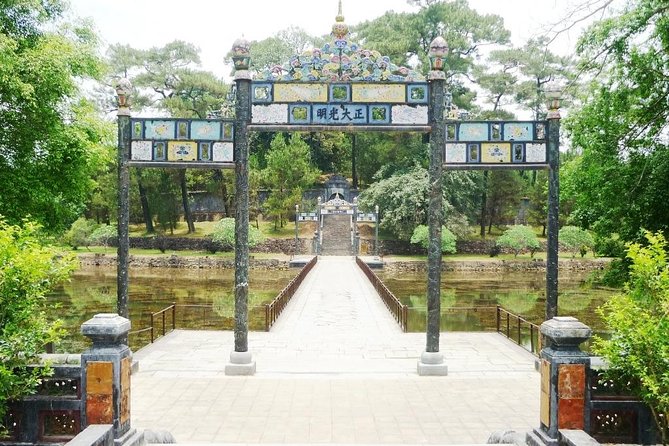
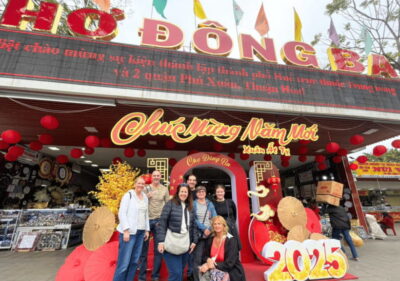
Around 15:30, you’ll visit Dong Ba Market for about 1 hour. The market is described as a preservation of old market character, with typical Vietnamese market features you can spot on the spot—like sampan landing details and the everyday rhythm of stalls.
This stop works because it changes the day from “monument mode” to “life mode.” You’ll get to see how Hue residents move through food, goods, and daily errands, even if you’re just walking and looking.
If you like taking photos, this is the better part of the day for it. Markets are messy in a good way—more texture, more color, and more small scenes than you’ll get at official sites.
Two cautions: go easy on buying too many snacks earlier in the day. Your next stop is incense village, which is better enjoyed after you’ve settled your hunger. And keep your pockets secure in crowded areas.
Thuy Xuan incense-making village: smell the craft, not just read about it
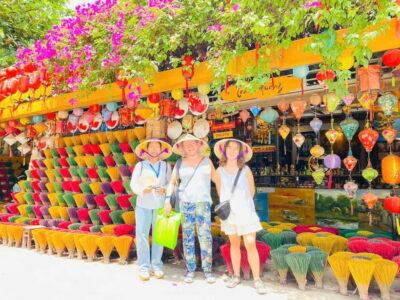
The day finishes with Thuy Xuan Incense-making Village, known as the largest incense-making village in Hue with a history of hundreds of years. What makes this stop click is that it’s not only visual.
You’ll enter the village and start smelling the incense filled air. That changes the experience from “touring” to “sensing.” You see the craft process, then you feel it.
This stop takes about 1 hour, with admission included. It’s also a good finale because the scent is memorable even after you leave. A lot of city tours show you buildings; this one lets you experience something you’d struggle to get from a photo.
Wear clothes you’re okay with. Incense is fragrant and can cling to fabrics. That’s not a reason not to go—just a heads-up so you don’t leave smelling strongly if you have dinner plans immediately afterward.
Price and value: what $59 includes (and what to watch)
At $59 per person, this tour stacks value in three places:
1) Pickup and drop-off from central Hue
You’re not negotiating transport or paying for separate city rides between stops.
2) Entrance fees included
For tombs, the citadel, pagoda, and the incense village, this saves time and avoids the pay-at-the-door scramble.
3) Lunch plus bottled water
These aren’t glamorous add-ons, but in a long 8–9 hour day, they protect your energy and keep the schedule on track.
What’s not included is beverages during lunch, and pickup/drop-off outside central Hue isn’t part of the package. So if your hotel sits far out, confirm it’s within central Hue pickup range.
Also note that group size can matter. With a maximum of 12, you should still feel like a small group day rather than a big bus experience.
What to expect day-of: timing, walking, and comfort
A typical flow looks like this: morning tomb visits, lunch around midday, citadel and pagoda in the afternoon, then market and incense to close. The day ends around 16:45, with drop-off back to your hotel in central Hue.
The biggest comfort issue is walking. Even with time limits per stop, tomb and citadel areas can involve steps and uneven ground. One practical lesson from real-world experiences: plan for sore legs. Bring shoes you can handle on stone and stairs and keep your pace relaxed on the uphill parts.
Weather matters too. The experience is described as requiring good weather, and if conditions are poor, you’ll be offered a different date or a full refund. That’s important in Hue, where rain can change outdoor walking.
Who this tour suits best
This is a strong fit if you want:
- A focused Hue day that covers tombs, citadel sites, pagoda, and market time
- Fewer logistics headaches thanks to hotel pickup and drop-off
- A mix of serious history and hands-on craft culture via incense village
- A small-group experience (up to 12), with an English-speaking guide
It may be less ideal if you’re looking for a laid-back day with minimal walking. This is a “see a lot” itinerary. You’ll likely feel it in your legs by the end.
Should you book this Hue City tour?
I’d book it if you want a well-paced, organized day that hits the major Hue icons without the stress of planning. The best reason is simple: entrance fees and lunch are included, and the route covers royal tombs, imperial architecture, a pagoda by dragon boat, plus the incense village where you smell the craft.
Skip or reconsider if you’re very mobility-limited or you want long downtime between sights. The day is packed enough that you won’t have much space for detours.
If your goal is to understand Hue in one full sweep—how the Nguyen court built power, how the pagoda anchors local spirituality, how incense work continues—this tour delivers strong value for the time you spend.
FAQ
How long is the Hue City Private Tour?
The tour runs about 8 to 9 hours.
What does the $59 price include?
It includes hotel pickup and drop-off in central Hue, entrance fees for the sites on the itinerary, an English-speaking guide, lunch at a local restaurant (Hue traditional food), and bottled water.
Are entrance fees included?
Yes. Entrance fees are included for the stops listed on the itinerary.
Is lunch included, and what kind of food is it?
Lunch is included, and it’s Hue traditional food served at a local restaurant.
Do you visit Thien Mu Pagoda, and how do you get there?
Yes, you visit Thien Mu Pagoda, and you go there by dragon boat.
Does the tour include Thanh Toan Bridge?
Yes. The tour includes a stop at Thanh Toan Bridge, known for being a rare wooden arched bridge.
Is pickup available in Hue?
Pickup is offered from hotels in central Hue. Pickup is not included outside the center of Hue.
How many people are in a group?
The maximum group size is 12 travelers.
What happens if the weather is bad?
The experience requires good weather. If it’s canceled due to poor weather, you’ll be offered a different date or a full refund.
More Tour Reviews in Hue
- Hue to Hoi An ( Hoi An to Hue) Top Gear with Lefamily Riders Tours ( 1 way)
★ 5.0 · 3,156 reviews - Easy Rider private tour via Hai Van pass from Hue – Da Nang – Hoi An (1Way|Loop)
★ 5.0 · 1,542 reviews - Easy Rider From Hue Da Nang Hoi An Via Hai Van Pass With Mister T
★ 5.0 · 769 reviews - Hue to Dn/Hoi An: Hai Van Pass, beaches & Mt Monkey or vice versa
★ 5.0 · 743 reviews - Hue: Imperial City Walk, Motorbike Tour & Private Car Options
★ 5.0 · 732 reviews - Hue city Deluxe Group Tour (Daily Tour-12 pax max)
★ 5.0 · 569 reviews
Thien Mu and the Riverside Pagodas
- Hue: 3 Tombs + Pagoda with Knowledgeable ES Driver
★ 5.0 · 200 reviews - Private Hue Tombs & Pagoda Tour with Local Guide
★ 5.0 · 64 reviews - Hue Royal Tombs Tour: Visit Best Pagoda & King’s Mausoleums
★ 5.0 · 36 reviews - Hue: Royal Tombs Tour – Visit 3 Best Tombs & Pagoda
★ 5.0 · 21 reviews - Hue Private Guided Tour : Citadel, Royal tombs, Thien Mu pagoda
★ 5.0 · 19 reviews - Hue Dragon Boat Tour: Perfume River, Royal Tombs, Hon Chen Temple
★ 5.0 · 18 reviews
The Resting Places of the Nguyen Kings
- Hue: 3 Tombs + Pagoda with Knowledgeable ES Driver
★ 5.0 · 200 reviews - Explore 3 Royal Tombs with Informative English-Speaking Driver
★ 5.0 · 76 reviews - Private Hue Tombs & Pagoda Tour with Local Guide
★ 5.0 · 64 reviews - Hue Royal Tombs Tour: Visit Best Pagoda & King’s Mausoleums
★ 5.0 · 36 reviews - Hue: Royal Tombs Tour – Visit 3 Best Tombs & Pagoda
★ 5.0 · 21 reviews - Hue Tombs Tour by Bike & Dragon Boat Cruise on Perfume River
★ 5.0 · 21 reviews
Latest Hue Tours We Have Written Up




Royal Tombs Tours, compared.
 ★ 4.9Royal Tombs & Pagoda Private Tour By Dragon Boat & CarFrom $12257 reviews
 ★ 4.9Royal Tombs Private Tour with 3 Best Tombs & PagodaFrom $11213 reviews
 ★ 5.03 Tombs + Pagoda with Knowledgeable ES DriverFrom $31200 reviews
 ★ 4.9Dragon Boat, Perfume River, Pagoda & Royal Tomb TourFrom $11194 reviews
 ★ 4.9Hue Royal Tombs Tour Visit 3 Best Tombs & PagodaFrom $11170 reviews
 ★ 4.8Private Dragon Boat, Pagoda, and Royal Tomb TourFrom $13141 reviews
 ★ 5.0Explore 3 Royal Tombs with Informative English-Speaking DriverFrom $2776 reviews
 ★ 4.8Hue Imperial Citadel, Tombs, Perfume River Boat Tour & VanFrom $2076 reviews
Browse the lists this tour appears in